
Einstürzende Neubauten: between the silence and the noise of the "collapsing new buildings"
Marco Mandrino
By Alice Kundalini - She Spread Sorrow
Einstürzende Neubauten (that is, “Collapsing New Buildings”) were my personal bridge to industrial music, together with Psychic Tv, and the ferry to a conception of sound as art that was totally different from the one I was used to. That is why, for me, they are the band of origins, one I am bound to in an inescapable way. I remember as if it were yesterday the incredible joy of the day when the copy of Kollaps I had ordered arrived at a record shop I used to frequent as a girl (Zarathustra in Alessandria). And listening to it was… how can I put it… a true personal revolution.
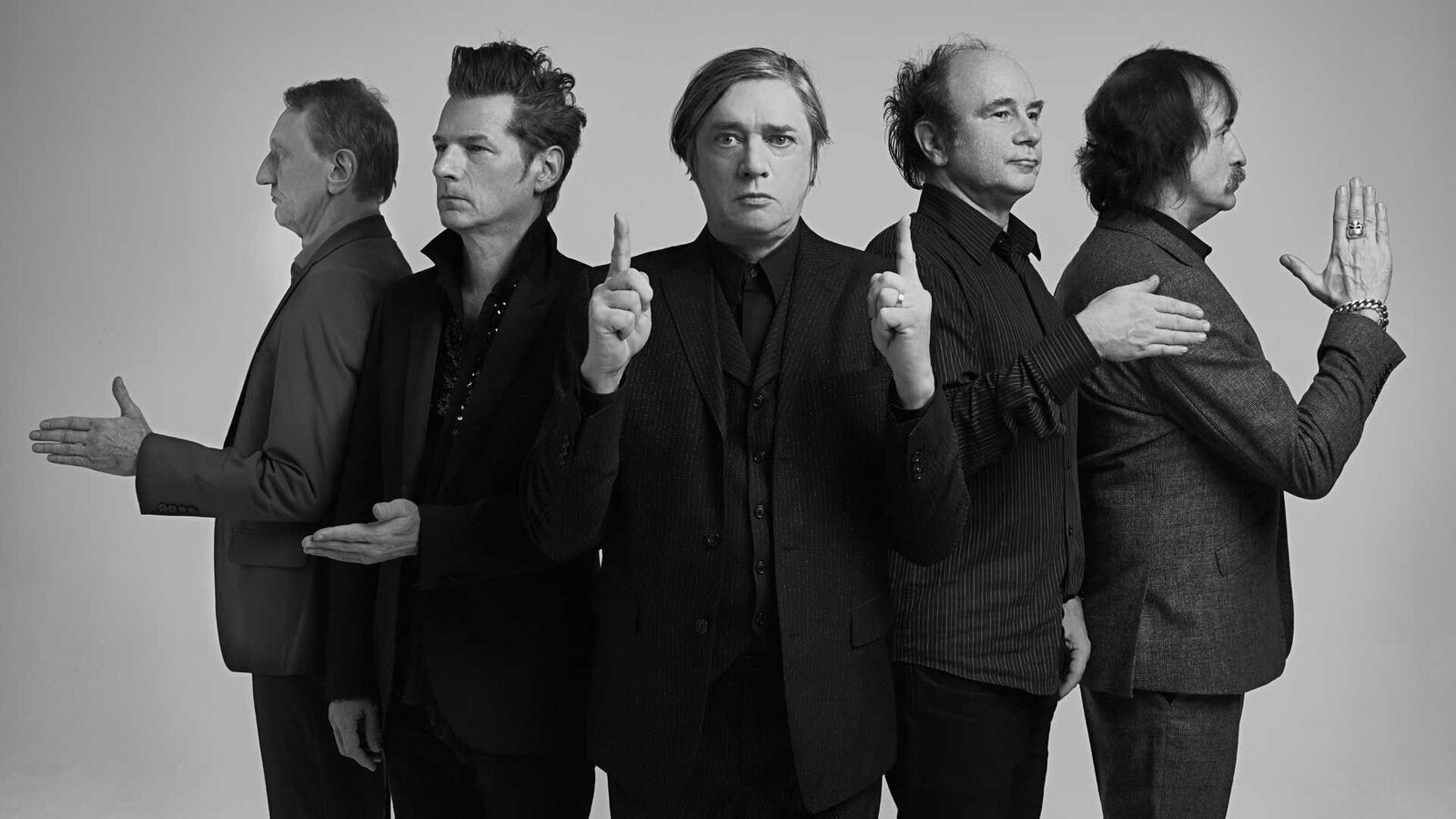
Einstürzende Neubauten are a band formed in the 1980s, influenced mainly by the industrial of Throbbing Gristle, by krautrock, but also by the artistic avant-gardes of the early 20th century. Over the years their aesthetic vision has become ever more complete, embracing not only sound but also image, lyrics, performance, the composition of the records and the instruments used on them. In the 1980s, having rejected every previous aesthetic canon in order to go “against” everything that sat within commonly accepted patterns, came also the rejection of musical composition and of the song form. No longer just conventional musical instruments, but also oil drums, drills and sheet metal. Einstürzende Neubauten recover harmony by using objects that apparently only make noise, in an approach very different from that of those who deliberately produced noise (even deafening noise, as we saw in the piece on Japanoise) perhaps using conventional musical instruments (for example by “scraping” the strings of a guitar). An approach born from a shared need for a totally new relationship with sound, the very earliest origins of which we can find precisely in the aforementioned artistic avant-gardes of the early 20th century, for example in Futurism or Dada.

As often happens, and as was the case, without looking too far, with the avant-gardes themselves, the more radical a artistic (but also political) movement is, the shorter its life. This is inherent in the very nature of the action, regardless of the intentions and goodness of the people and projects involved. Revolutionary movements are born with the aim of sweeping something away, of taking away to make room, and after the moment of rupture itself they rarely endure. They necessarily turn into something else, into a constructive rather than destructive force, which follows totally different logics. Some find a way to reinvent themselves, others stay “faithful” to their origins but often lose quality and originality, and others still simply disappear. Einstürzende Neubauten are among the very few who, while remaining completely faithful to the identity they built over the years, have maintained very high standards. Their latest album dates from 2020 and appeared in a great many lists of the best albums of the year. This is to say that they managed to endure without losing quality, and to turn the destructive force that animated the project's origins into a creative force.
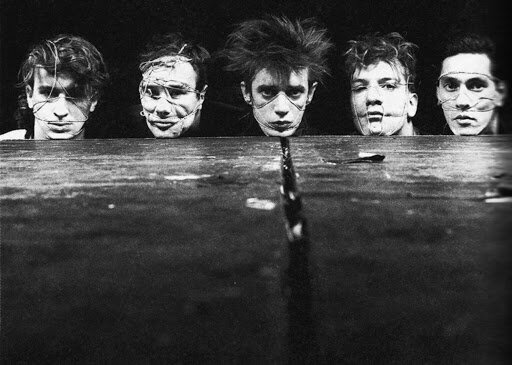
After the first, noisier and more chaotic records (Kalte Sterne, an EP from 1980, and Kollaps, their first album from 1981), the path taken by Einstürzende Neubauten changes in sound, becoming ever more harmonic and refined, with the lyrics and voice of Blixa Bargeld making listening to Einstürzende Neubauten a truly deep emotional experience, like reading a poem or losing yourself in front of a painting. The experimental, noise-based foundation remains, but with a new function, welcoming and harmonic, absolutely unique and original, thanks to the excellent musicians who make up the line-up (Alexander Hacke, N.U. Unruh, Jochen Arbeit, Rudolf Moser and others who have followed one another over the years).

Decisive in this metamorphosis was certainly Blixa's collaboration with Nick Cave and his joining the Bad Seeds in 1984. If Kollaps from 1981 is a record of noise, with the music reduced to a minimum, Alber Mensch from 1985 is a totally different record, with more harmonic structures and very eclectic. Without retracing the whole discography (which is not vast anyway, since they have often let several years pass between one record and the next), I will mention a few albums that I think are crucial.
In the 90s came Tabula Rasa, which contains one of the most moving and celebrated songs of all time, Blume, featuring the wonderful Anita Lane (sadly passed away only recently). In 2000 came Silence is Sexy, with masterpieces such as Sabrina. Perpetuum Mobile is also an excellent record, in which they remain faithful to this aesthetic of studying noise, silence, music and its boundaries, but with an emotional, poetic and artistic atmosphere that always comes across in an extremely direct way. I should also mention Lament from 2014, a commissioned record that gathers an incredible work of archival research, created a century after the outbreak of the First World War, using original tapes from those years of prisoners held in one of the first internment camps, near Berlin. Exactly a year ago, Alles in Allem was released, an excellent record, marked by the unique class of Blixa and his companions in adventure.
The most wonderful thing about the Einstürzende Neubauten is that they become more and more fascinating with age and, like a beautiful black dress, go with everything, in every season of life, at every moment of the day. So let us enjoy the beauty of deconstruction and of silence that turns into noise and harmony, as we await the next marvels they will give us.

Black Pills is a column that does not set out to teach anything. There are books, articles and manuals that deal with the biographies of artists, films and works of art in a detailed and exhaustive way. This is not one of those cases. The black pills are small glimpses of cultural and artistic landscapes, at times very broad, which offer the chance to explore themes that do not entirely belong to mass culture, but move along other channels and other circuits. In a world where the choice is often limited to what is defined, in the broadest sense, as pop, I highly recommend taking a few pills of a different colour and perhaps discovering something new, which in some cases, as in mine, can stay with you for the rest of your life.