
The discovery
Marco Mandrino
By Alice Kundalini - She Spread Sorrow
The first article of a new column is something symbolically very important. It is the first step on a path with so many possibilities ahead of it that it already feels like a choice. And it is. Black Pills is meant to be a space for personal storytelling about the passions that have guided me all my life. It is meant to be a space for sharing them and rediscovering them through storytelling. There are no educational pretensions, nor any claim to cover subjects exhaustively. Some of them would take more than a book. My black pills have only one aim: to tell a story and perhaps spark some curiosity, leaving it to the reader to decide whether or not to dig deeper.
So, where to begin? I'll begin with the discovery that perhaps more than any other has influenced my whole life. I didn't know at the time that that first step would lead onto a road I am still walking today. I still remember it: I was just over 16, and on one of those compilation tapes so popular in the 90s, made by a friend of a friend of a cousin who knows loads about music, I heard a track that left me speechless. Zyklon B Zombie was the title. Throbbing Gristle the band. The tape made by a friend of a friend of a cousin who knows loads about music was a tape of "industrial" music.
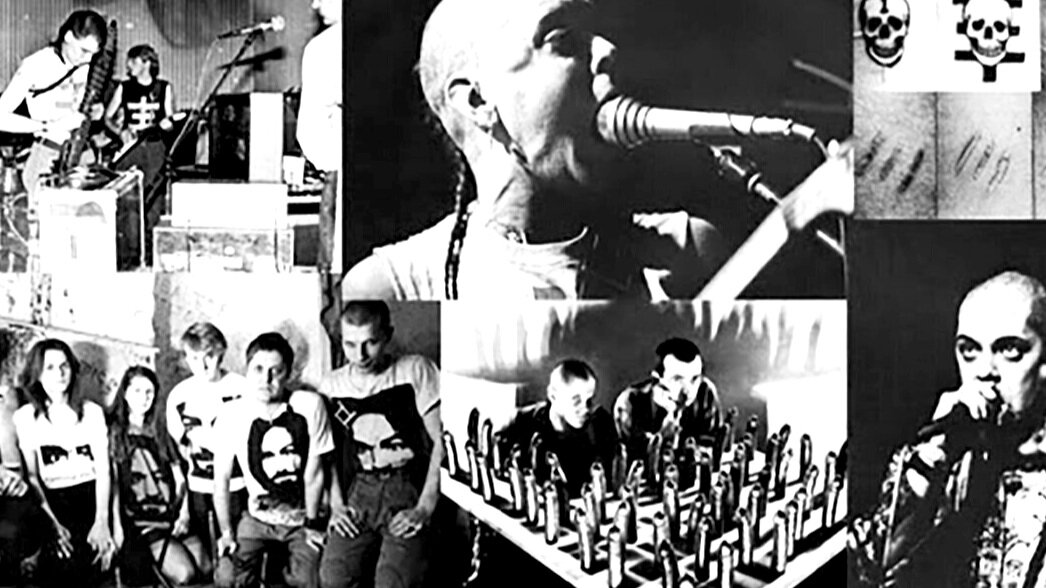
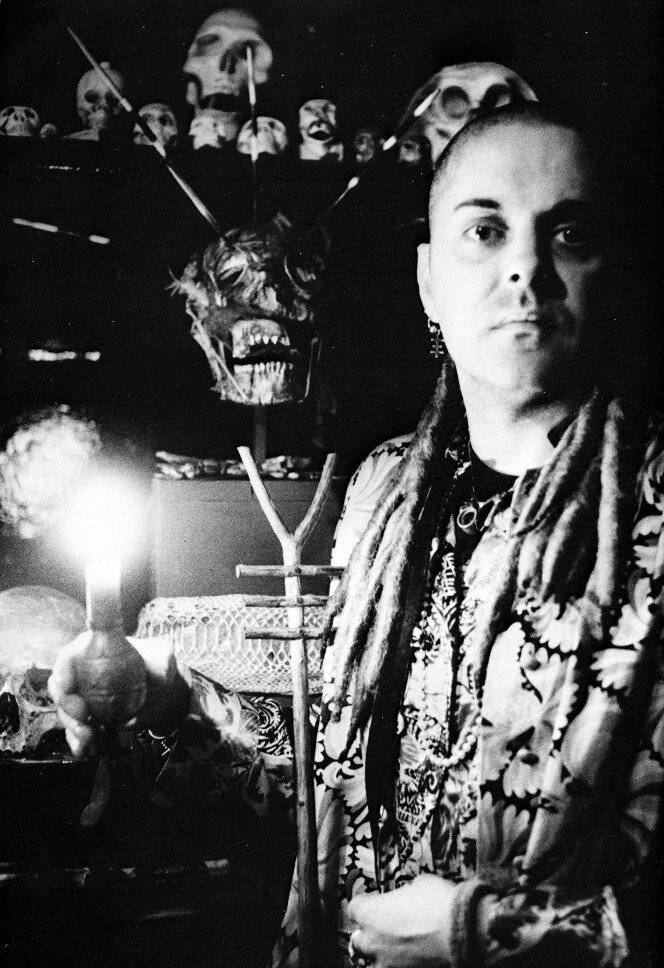
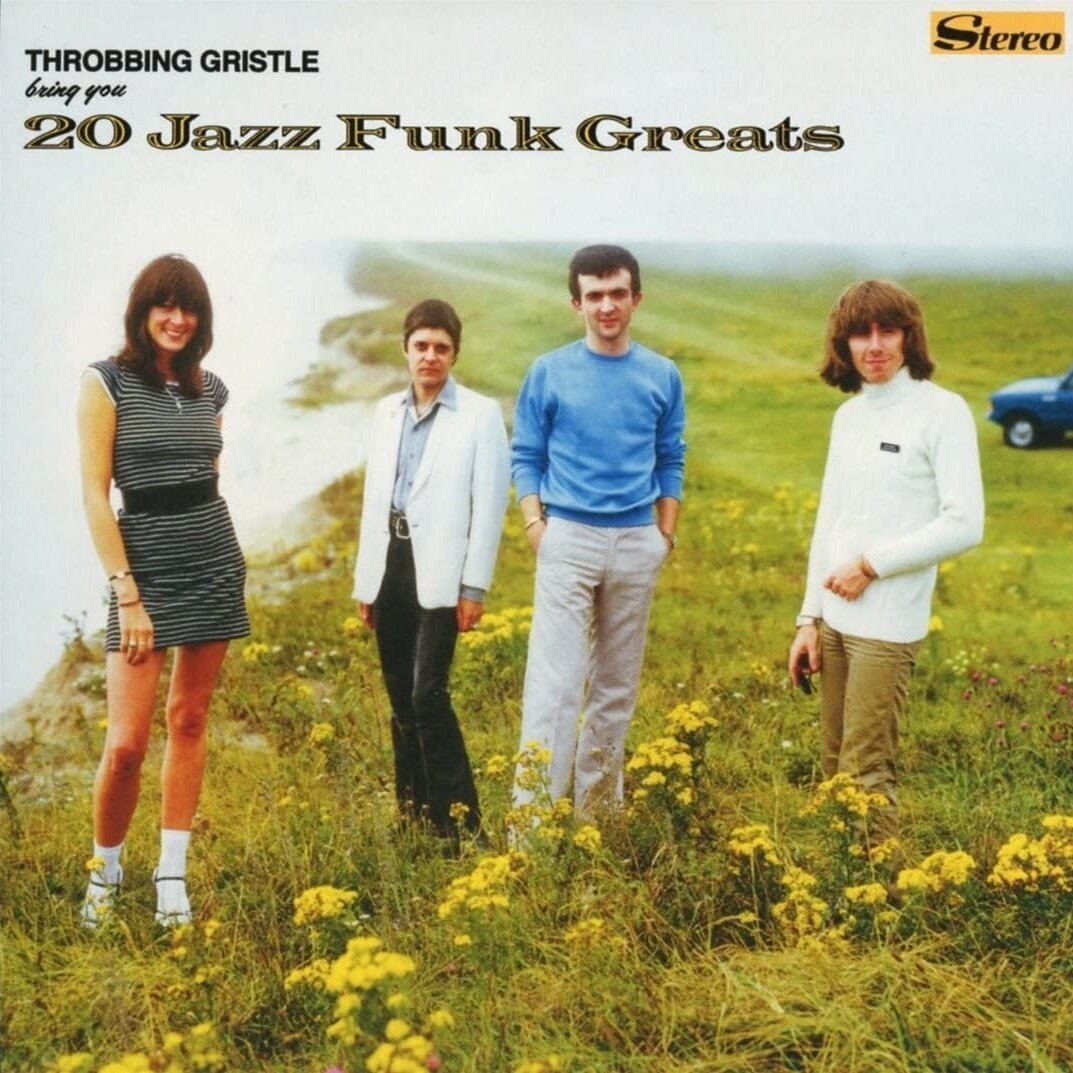
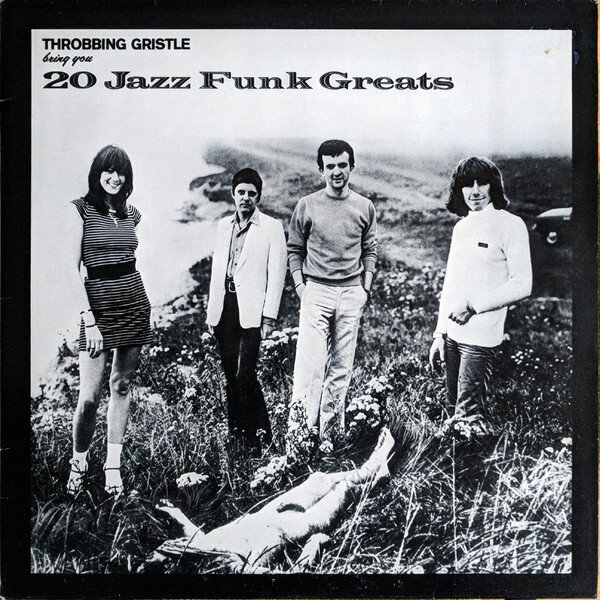
I admit it: at 16, for me industrial meant Nine Inch Nails and Marilyn Manson, stuff with big guitars, black nail varnish and so much rage to scream into the microphones. And yet I had read that these TG were considered among the founding fathers of industrial… Even though there were no heavy guitars, no metal attitude or anything of the sort. It was definitely a psychedelic, absurd, quirky track, relatively melodic… And the vocals… nothing to do with the harshness I was used to. Okay, it was clear I wasn't understanding a thing. But that's where the journey began. I discovered that the voice belonged to Genesis P. Orridge. A singer, a musician, a performer, an artist, who died on 14 March this year after a long career of some 50 years. One of those people who turned their own life into a work of art. Who, through surgery over the years, moved beyond gender differences to look more and more like his beloved life partner, Lady Jaye Breyer P-Orridge. I found out that Genesis P.Orridge also had other fundamental projects, Psychic TV and Coum Transimission. And I started searching, digging deeper, listening. And I fell in love. Through these projects I discovered other incredible, extreme, avant-garde artists, who hadn't just created a musical project that was innovative for its time (we're talking about the '70s and '80s), but an entire genre, a new form of art and expression. Starting from punk and going beyond it. Using invented musical instruments. Literally massacring the more traditional ones. Experimenting from every angle, not only sonically. Using noise and electronics as I had never heard them used before. And then the shocking techniques typical of the artistic avant-gardes. With a powerful, striking image. When I first saw the cover of 20 Jazz Funk Greats, I was already smitten. Alongside Genesis P. Orridge, Cosey Fanni Tutti, Chris Carter, Peter Christopherson. Posing like an ordinary funk band, smiling and reassuring, and on the back the very same photo, identical, but with a corpse at their feet.
And from there came my immense love for Cosey too, a huge, shocking, beautiful, brilliant woman, artist and musician who became a role model and a point of reference for me. Her later projects thrilled me, from Chris and Cosey to Cartertutti, projects made with her life partner Chris Carter, himself a member of both PTV and TG, as well as her solo work.
Theirs was not just a musical revolution, but an artistic and cultural one. In 1981 came TOPY, that is THEE TEMPLE OV PSYCHICK YOUTH, an association of bands founded by Genesis, a collective of artists and friends that included names like those mentioned above, but also COIL, CURRENT 93, ROSEMARY’S BABY. All bands whose music I began desperately hunting for (back then it wasn't as easy as it is now) and who carried me into a new musical and cultural world. TOPY was not only an artistic movement but also an esoteric one, focusing on the psychic powers of the human mind and involving magical rituals and sigils, aimed not at the worship of a deity but rather at liberating one's own sexuality and desires, driving away fear and guilt. TOPY involved members from different parts of the world, where there were "access points", a sort of branch of the original TOPY, and it came to count up to 10,000 sigils and contacts received in a single year. It drew inspiration from figures such as William S. Burroughs, Aleister Crowley, Austin Osman Spare and Brion Gysin. Its number, 23. Its symbol, the psychic cross. There are several texts on the subject that I recommend reading, including Manuale di cultura industriale, edited by the musician and friend Paolo Bandera. TOPY lasted about 10 years, until pressure from the police and the media forced Genesis to leave England and move to New York. Below is a video that can serve as a fine testimony to what TOPY was.
The story, the life and the art created by these people were a revelation to me. Genesis P.Orridge was obviously an extremely controversial figure, not only for the conventionally minded, but also for many fans of the genre and for many industry insiders. I don't feel I have the necessary tools either to back his detractors or to defend him; the only thing I know, and the only thing that matters to me, is that he was the figure who introduced me to an entire artistic world, powerfully animated by his personality, certainly gigantic and perhaps at times overbearing. It captivated me and led me to choose to stop playing classical guitar and start producing something else, taught me to hear music in noise and to always question every concept taken for granted, seeking a personal vision and a means of expression of my own, looking in uniqueness for the key to breaking away from the masses and the dominant culture, and in the often difficult choice of the path of experimentation, a constant push towards whatever is different.

Black Pills is a column that does not set out to teach anything. There are books, articles and manuals that deal with the biographies of artists, films and works of art in a detailed and exhaustive way. This is not one of those cases. The black pills are small glimpses of cultural and artistic landscapes, at times very broad, which offer the chance to explore themes that do not entirely belong to mass culture, but move along other channels and other circuits. In a world where the choice is often limited to what is defined, in the broadest sense, as pop, I highly recommend taking a few pills of a different colour and perhaps discovering something new, which in some cases, as in mine, can stay with you for the rest of your life.