
Trevor Brown: when the extreme takes on a pop hue
Marco Mandrino
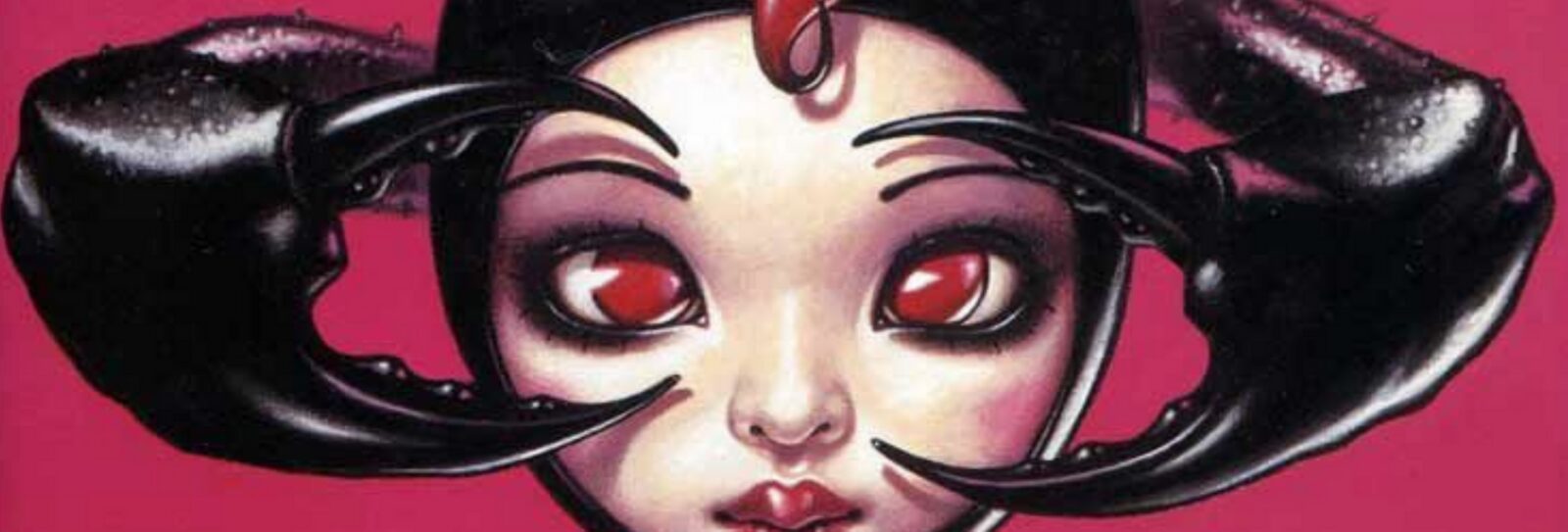
Curated by Alice Kundalini - She Spread Sorrow
I discovered Trevor Brown through the covers of Whitehouse, the English power electronics group, among the masters and pioneers of the genre, which sees provocation, excess and shock tactics as the central core of its aesthetic. Quality Time, Halogen, Mummy and daddy, Twice is not enough, Just like a cunt: these are all covers that bear his signature.
I should say that the first time I heard Whitehouse I was not yet 20, and I thought my stereo had broken. And when I realised that wasn't the case, I thought the record was somehow corrupted, damaged. In short, my brain couldn't make sense of it. I had never listened to power electronics; I had some experience of industrial, but, although harsh and noisy, it hadn't prepared me enough for Whitehouse. Violent noise and mad screams, horrifying lyrics and themes that make you put your head in your hands.
Obviously, being fairly stubborn and above all extremely curious, not understanding then opened up a whole world to me, until I discovered that there is an entire musical genre like this, with subgenres and variations, and plenty of people involved (not that many, to tell the truth, but considering how hard it is to get into, there are quite a few of us). In the end, fascinated by the extreme and by whatever lies always beyond, it became one of the genres I have listened to the most and also "played", if you can put it that way.
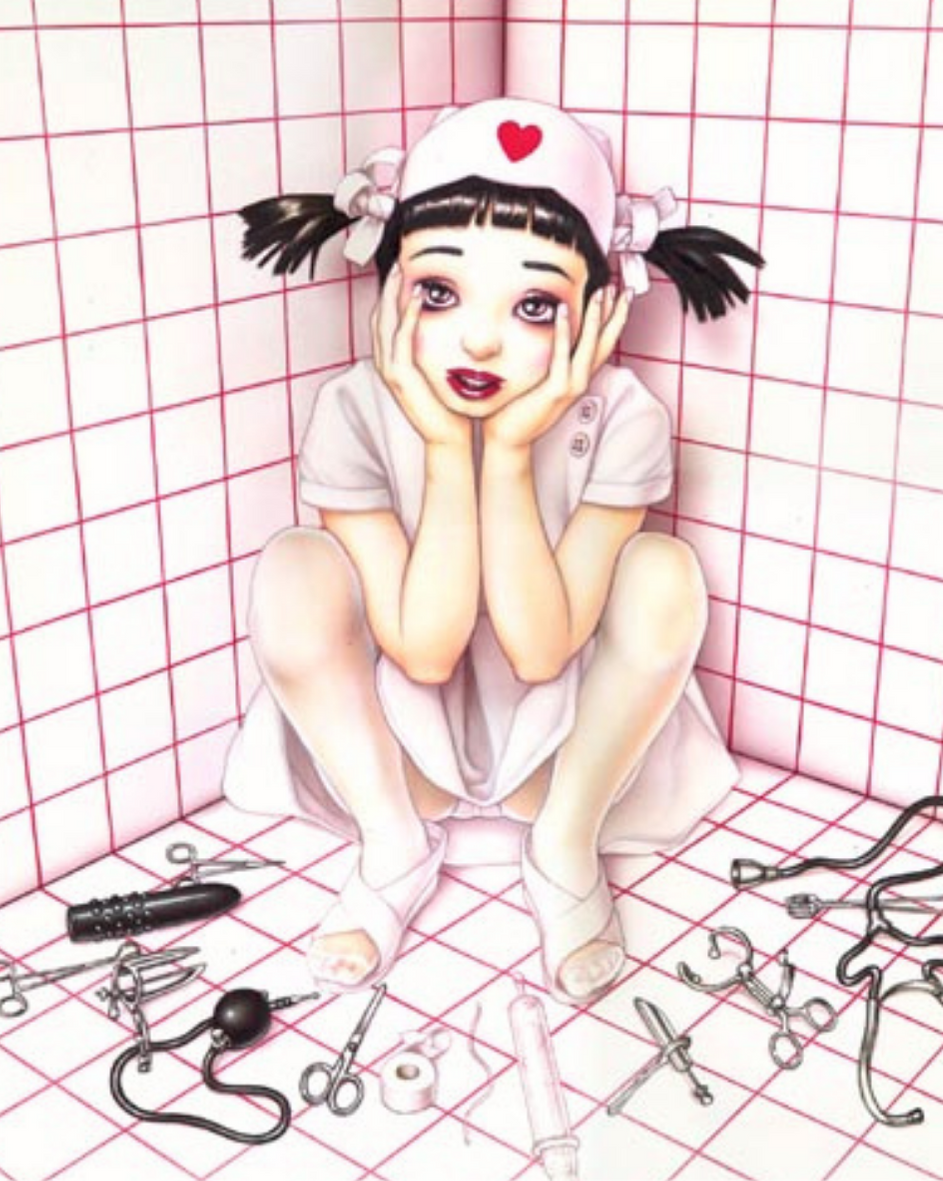
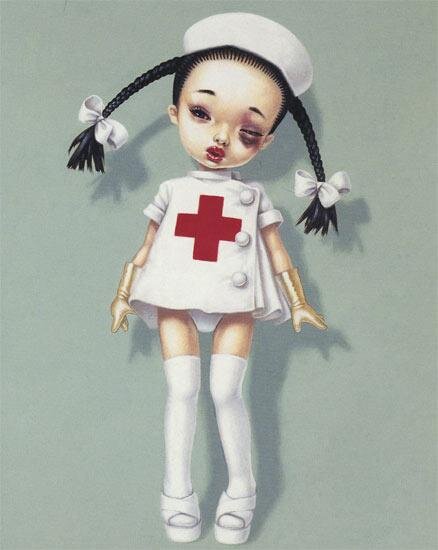
So if you imagine the cover of a record by a group like Whitehouse, you are hardly likely to think of colourful drawings in pastel shades and soft, almost cartoon-like shapes. And yet that is exactly what they are, at least for the covers I mentioned above, which are among the group's most famous.
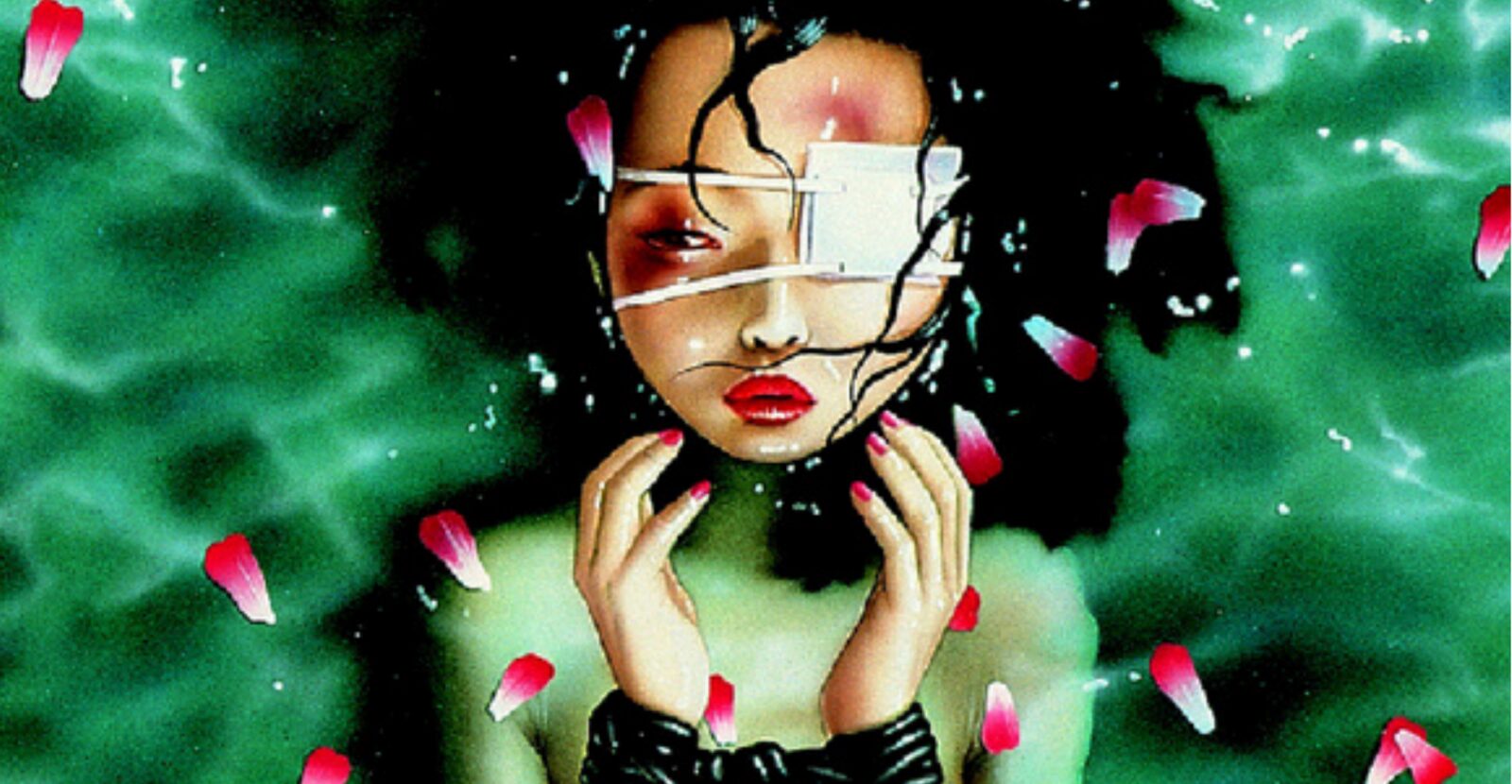
Trevor Brown is an English illustrator who has lived and worked in Tokyo since the 1990s. A lover of Japanese art in the style of Maruo, he has created a personal style that fuses the pop imagery of Japanese culture with the extremes typical of that society, developing highly controversial themes, above all linked to paraphilias, sexual perversions, domestic violence, BDSM and fetish.
Inspired by Romain Slocombe, a pioneer of medical art, by authors such as Georges Bataille and the Marquis de Sade, and by the dolls made by his wife, he blends the colours and shapes of Japanese pop style with disturbing, at times even extreme content, such as that described above.
Among his publications, one of my favourites is his reimagining of Alice in Wonderland (Trevor Brown's Alice, 2010), for which he created incredible illustrations, capable of capturing the madness of Carroll's work and fusing it with his own, bringing the book's visions into a perfect union with his personal aesthetic. Other works I am particularly fond of are Rubber Doll, an ultra-pop depiction of fetish in its most disturbing forms;MedicalFun, which takes up the typical aesthetic of medical art;Li'l Miss Sticky Kiss, a collection of some of his most famous little dolls;ForbiddenFruit, which includes some of his works with an aesthetic that I find less pop and colourful and perhaps more disturbing; and then some black-and-white works, with edgier, less defined lines, an aesthetic that remains recognisable despite being extremely different: Temple of Blashpemy and Black & White.
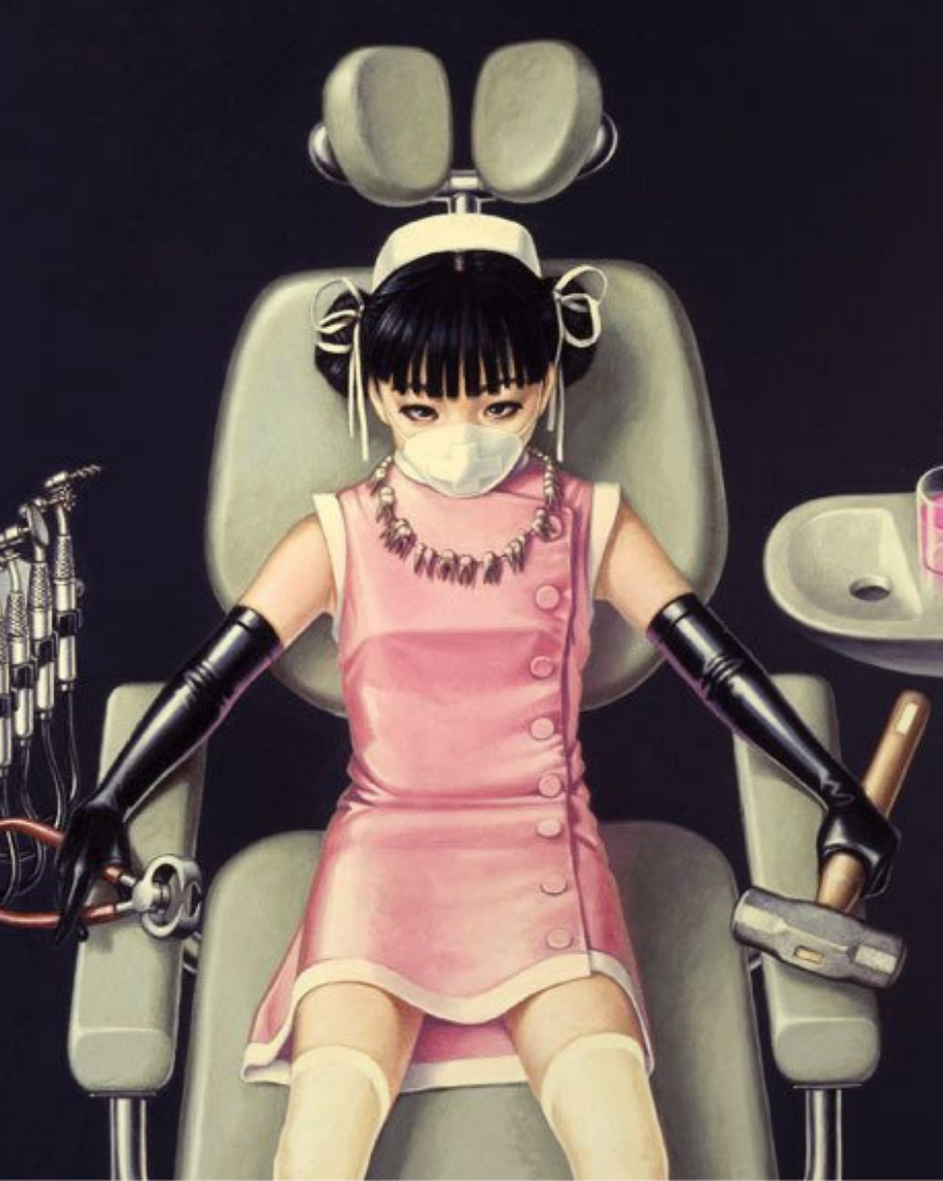
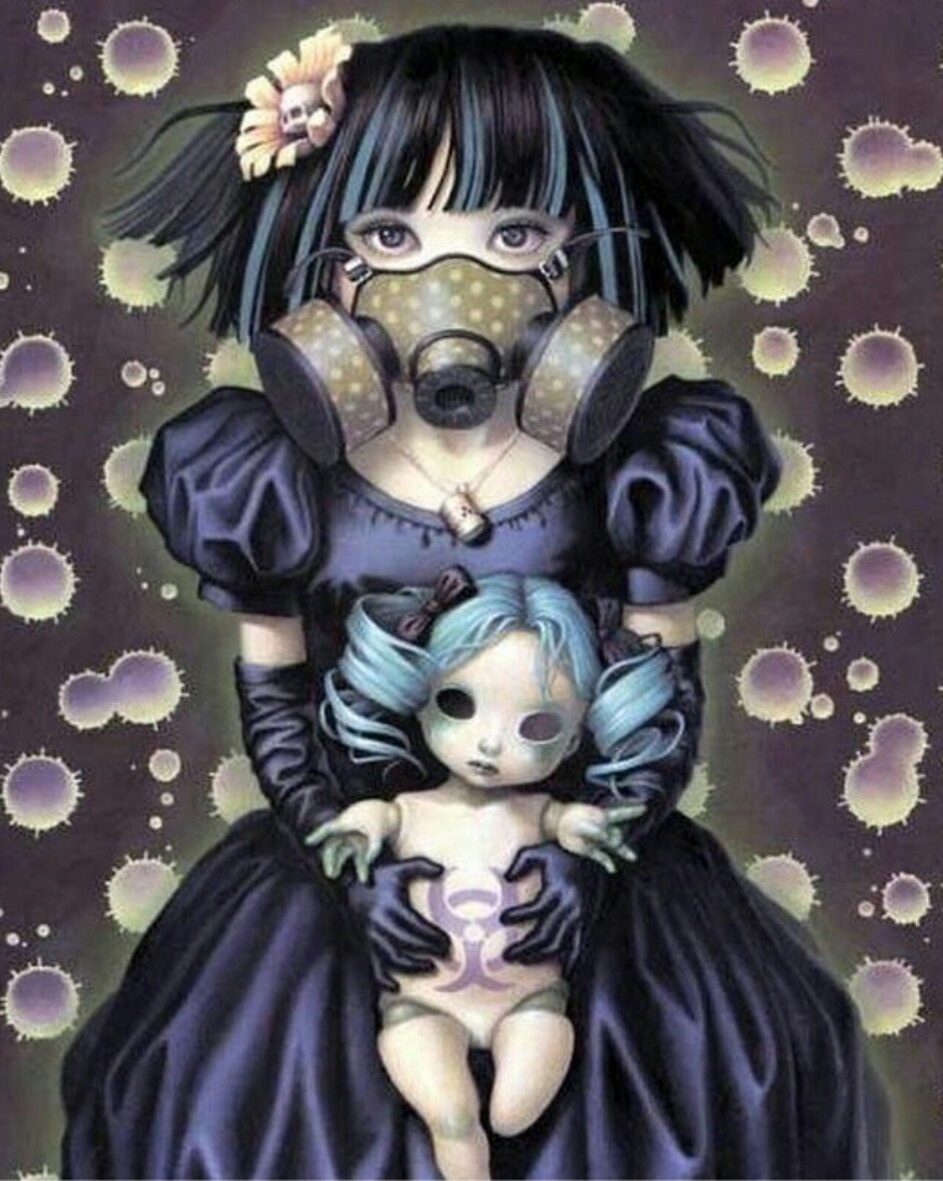
Besides Whitehouse, he has done covers for many other artists, such as Deicide, GG Allin, John Zorn, Venetian Snares, Kayo Dot, Crystal Castle and more. And besides publications, there have also been exhibitions, many of them in Japan, leaving Italy for once with a sort of positive record, as Bologna (at the Mondo Bizzarro Gallery) is one of the few cities, along with Los Angeles, to have hosted his exhibitions in the West.
It goes without saying that both Whitehouse and Trevor Brown, while on the one hand they have enjoyed great success among enthusiasts and their "marriage" has become a true cult,on the other have stirred up hordes of prudes ready to point the finger and be shocked by what they have done. With accusations, controversies and denunciations of every kind, they have very often been at the centre of heated debates about morality. Obviously, for artists like them this is exactly the reaction they want, so all the better, mission accomplished. For those who don't like to confine artistic expression within the fence of common morality, but instead enjoy using the language of art to destroy every boundary, the masters of provocation will not leave you indifferent, and when they come together, they usually write pages of books, or at least of blogs, like this one.

Black Pills is a column that does not set out to teach anything. There are books, articles and manuals that deal with the biographies of artists, films and works of art in a detailed and exhaustive way. This is not one of those cases. The black pills are small glimpses of cultural and artistic landscapes, at times very broad, which offer the chance to explore themes that do not entirely belong to mass culture, but move along other channels and other circuits. In a world where the choice is often limited to what is defined, in the broadest sense, as pop, I highly recommend taking a few pills of a different colour and perhaps discovering something new, which in some cases, as in mine, can stay with you for the rest of your life.