
Tras el Cristal – In a Glass Cage
Marco Mandrino
Curated by Alice Kundalini - She Spread Sorrow
The questions “Who is your favourite artist?” or “What is your favourite film?” are among the ones that torment me most. First of all, because they are rather silly questions that can only have a superficial answer. But also because I am quite unstable, especially in my tastes, and I can't bear finding myself in that situation where I don't know what to say, so I start listing things I like as they come to mind, without it really making any sense, just to say something and not come across as the usual person who thinks she's better than everyone else and so won't play along with this sort of thing. When it comes to music, the problem persists – indeed, it grows with time – but with cinema it was settled for good the day I first saw Tras El Cristal. There is no doubt: however silly the question and the search for an answer may be, that day I said to myself, this is my favourite film.
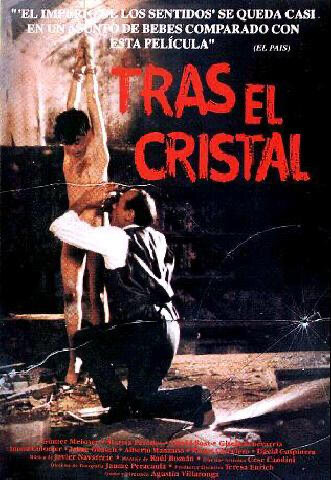
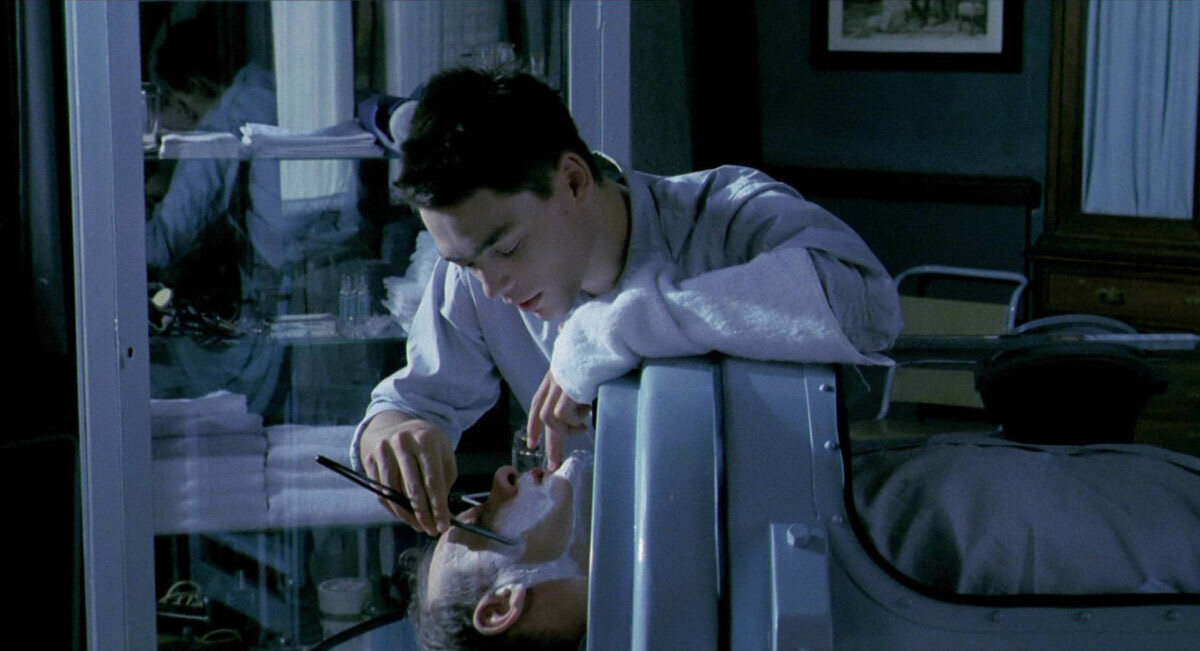
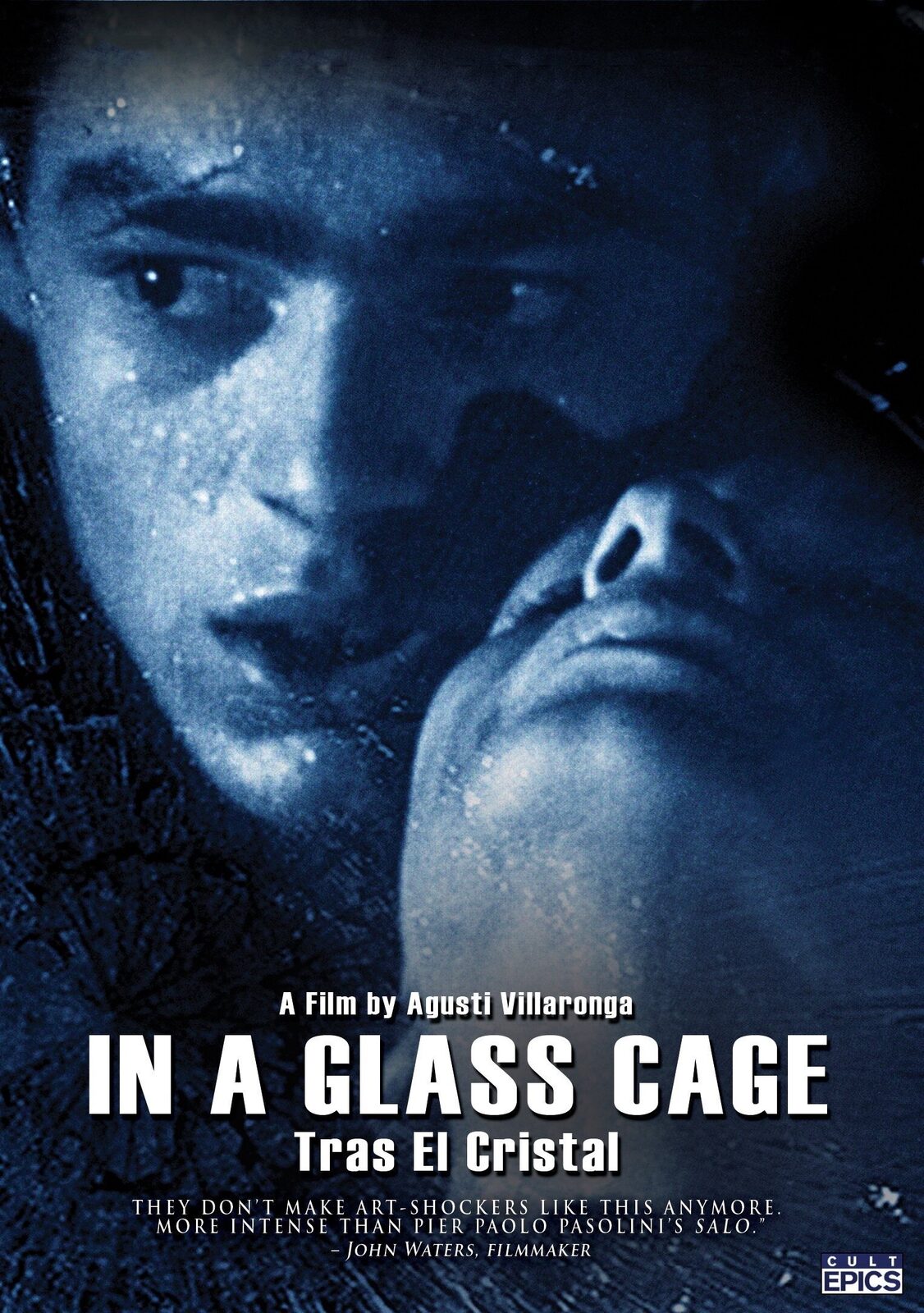
Tras El Cristal, whose title in English is In A Glass Cage, is a 1987 film classed as horror, directed by Augustin Villaronga. According to many, and to me too, it is his best film. The reason I call it my favourite film is that it is an extreme, harsh, disturbing film and at the same time aesthetically marvellous and poetic. The story is atrocious. Klaus is a torturer and murderer with a predilection for young boys, even children, with a past as an executioner in a Nazi concentration camp, who is left completely paralysed after a failed suicide attempt, and is thus forced to live in an iron lung, from which only his head emerges.
The young Angelo turns up to take care of him and, following a diary he has found and a childhood memory, he too discovers a morbid attraction to death and violence. The subject matter is extreme, to say the least. It is certainly not a film for everyone. You need a strong stomach – a very strong one. It brings you into contact with the deep evil that can be found within the human soul. It forces you to reckon with morality, ethics, human drives, the concepts of good and evil, of the instinct for life and for death.
Especially in recent times, extreme films – the ones where you think “I can't take this, I'm turning it off” – have multiplied. But the extremity is mainly visual. Made of violence. Special effects. Often it all feels rather gratuitous, made on purpose to shock and push ever further, but without any real meaning. This is not the case with Tras El Cristal. If anything, it is exactly the opposite. The atmosphere of the film is completely different. Claustrophobic, with very few exterior scenes. Slow. Rarefied. Often tinted in shades of blue, creating a cold, icy, dark, deathly atmosphere. The violence is almost never overt. Explicit scenes are rare. Most things are barely suggested. And that hurts even more, because not seeing forces you to imagine. It moves your mind from a passive role of absorption and defence against the strong images typical of certain horror films to a completely active one, in which exchanges of glances, dialogue of few words and dark images that show almost nothing lead your own mind to create what is happening. That is why it is one of those films that is not for everyone. It often proves unbearable. It brings you into contact with a side so dark that you are not prepared for it. It is an utterly scandalous film in the most literal sense of the word. The theme is the irrepressible, contagious attraction to pain and death. It hurts to see pleasure associated with evil. With a disgusting form of evil. And if we are used to finding victims and perpetrators, in Tras El Cristal the perpetrator becomes a sort of model, a master who is followed by the one who should be a victim and who instead becomes an even more ruthless perpetrator.
And the dramatic thing in this context is the beauty. Yes, because a horror film this disturbing is usually associated with brutal images (some are present, like the first, extremely savage scene, but they are few compared with what we might find in any horror film) and with fast direction, with loud noises and strong, exaggerated colours. Here it is exactly the opposite. The images are beautiful. Aesthetically, paintings. Everything is slowly brushed in with care for every detail. Everything is subdued. Hinted at. The poetry is evident. And it is terrifying to use this language, because this too leads to a very powerful mental conflict, the one between form and content.
It forces our mind not only into an active role of imagination, but also into its passive role of absorption, into defending itself against what is apparently harmless, fascinating, composed, beautiful, precisely. And so, no, it is not for everyone, but only for those who want to come into conflict with their own certainties. For those who are not afraid to dig into morality and let themselves be guided into a dangerous territory where one will certainly find questions about the human being and his “radical evil”, the answers to which can be truly painful and disturbing.

Black Pills is a column that does not set out to teach anything. There are books, articles and manuals that deal with the biographies of artists, films and works of art in a detailed and exhaustive way. This is not one of those cases. The black pills are small glimpses of cultural and artistic landscapes, at times very broad, which offer the chance to explore themes that do not entirely belong to mass culture, but move along other channels and other circuits. In a world where the choice is often limited to what is defined, in the broadest sense, as pop, I highly recommend taking a few pills of a different colour and perhaps discovering something new, which in some cases, as in mine, can stay with you for the rest of your life.