
Suehiro Maruo: love and death in comics
Marco Mandrino
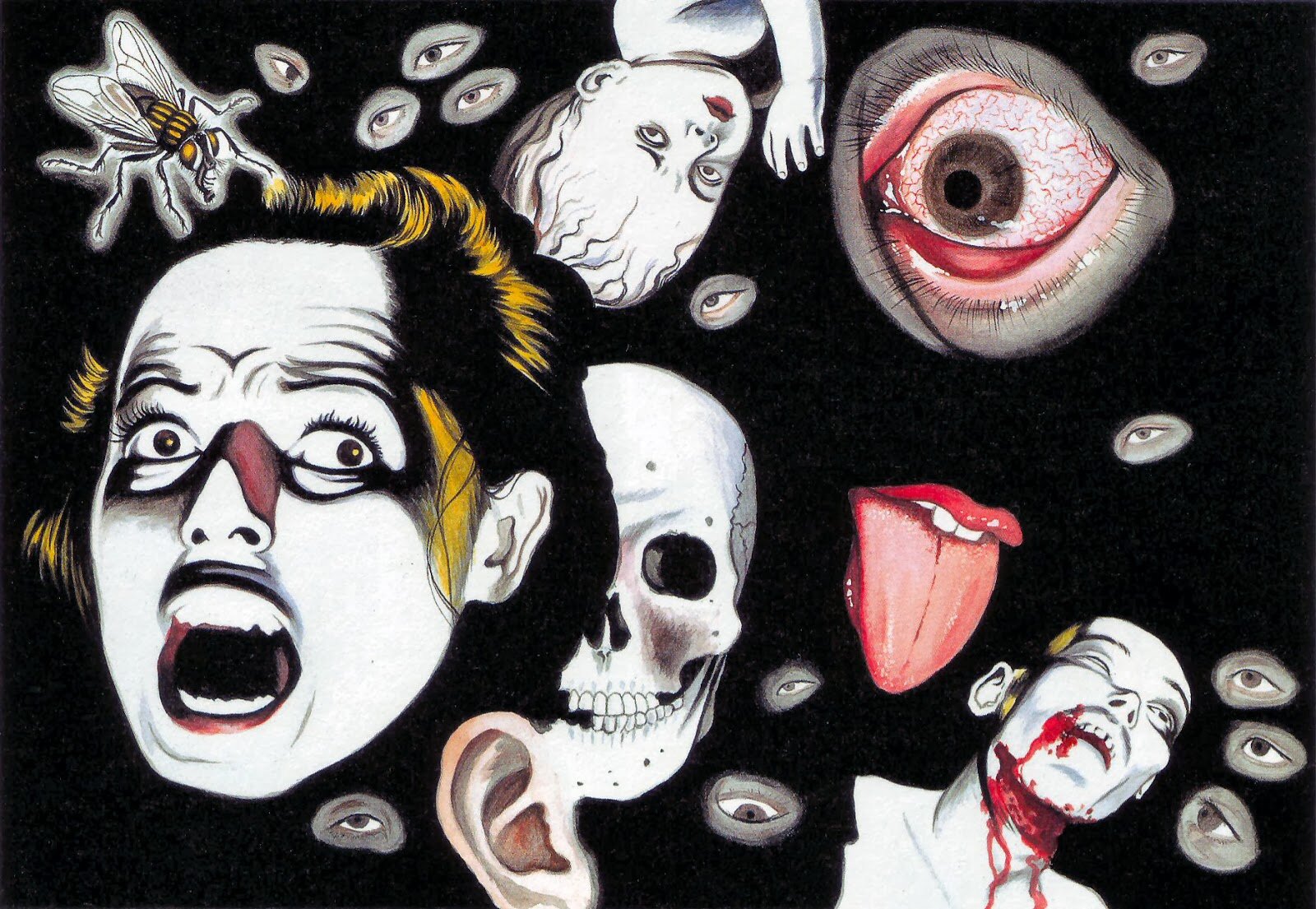
By Alice Kundalini - She Spread Sorrow
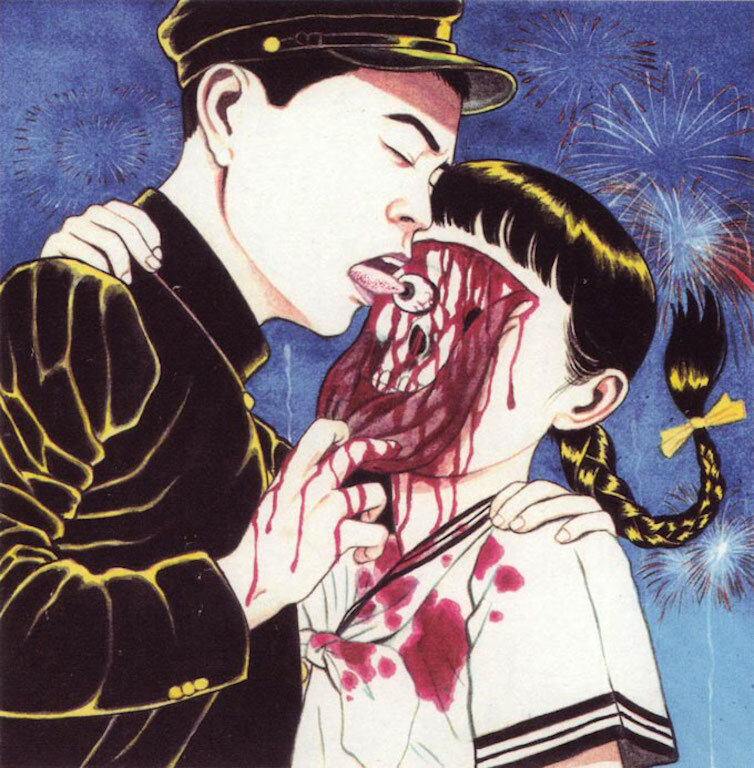
Suehiro Maruo is a Japanese comic artist, painter and illustrator, born in 1956, considered one of the masters, if not the master, of the ero-guro genre, a union of the erotic and the macabre, eros and thanatos. A rather troubled life and a restless spirit find expression in his work, whether comics or illustrations. From a delicate balance between what is attractive and what is repulsive, there emerge surreal, wicked, perverse characters, or extremely pure, innocent, abstract ones, in a constant contrast between light and darkness, good and evil.
In 1984 came Midori - La ragazza delle camelie, one of his masterpieces and perhaps the work I feel most attached to. Midori is a little girl, a symbol of inner purity and goodness in the highest sense of the word. Abandoned, alone, so fragile that she embodies an archetype of youth, one that makes us feel so close to her that we want to protect her. She is taken in, if we can put it that way, by a circus that is exactly her opposite, a micro-world made of perversions and dark, frightening, evil characters. The planes of reality blur, the distinction between what is real and what is imagined, between what is a dream and what is a nightmare, is lost. Midori then meets an ambiguous figure who takes her away with him, and the boundaries between what is real and what is not become ever more confused, until every distinction is lost altogether, in a dimension of extreme loneliness and estrangement, close to madness. Purity dragged into folly by a hard life and wicked people. The marvellous and brutal illustrations lead us into this spiral together with Midori. Here you can watch a medium-length film from 1992.
Maruo has many masterpieces, Notte Putrescente for example, a visionary and unsettling collection of short stories, in which we let the master lead us through a surreal everyday life. La Strana Storia dell'Isola di Panorama, from 2008, in which a failed writer named Hitomi takes the place of a wealthy businessman he closely resembles and builds his dream: on a remote island comes to life a place of unwholesome parties, intrigue, orgies and decadence. It is based on an early twentieth-century story by Edogawa Ranpo (the Japanese Edgar Allan Poe), as is Il Bruco (2009), the story of a lieutenant who returns from Siberia with terrible injuries, without legs, arms, ears or vocal cords, and of his morbid, perverse and desperate relationship with his wife.
His latest work dates from 2014, Tomino la dannata, the story of two abandoned twins, raised like animals by their adoptive family and sold to a strange figure, as if they were freaks of a sideshow. Unlike Midori, however, here the two children form strong bonds with the others in the group, each with a past tormented by their own deformities or differences, like the octopus girl or the gorilla boy.
Maruo is a true master at carrying us into a world of opposites: between the erotic and the perverse, between innocence and wickedness, between good and evil, between the real and the surreal, between dream and nightmare. With his drawings and stories, he creates another world, one that is extremely easy to dive into and get lost in, sometimes in an alienating way, sometimes a moving one, sometimes a grotesque one. His are always stories of fragility, of difference, of injustice, but also of deep bonds between those who live with marginalisation, abandonment and loneliness, and of incredible characters, with stories that the more unreal they seem, the closer they come to us.
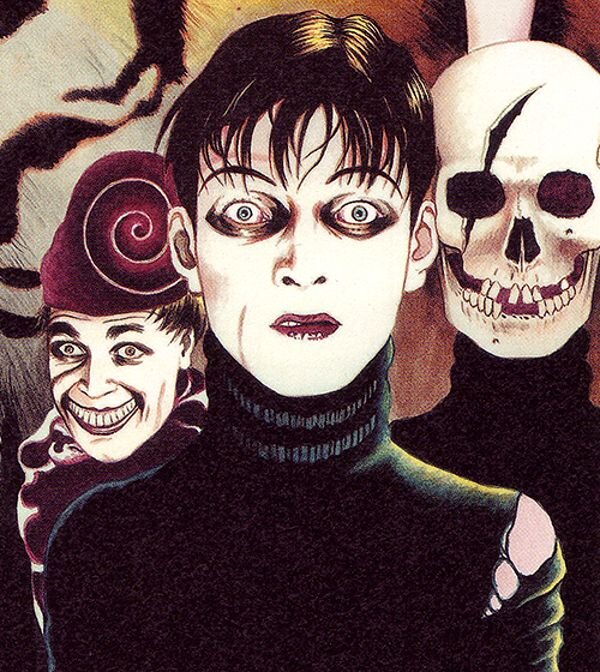

Black Pills is a column that does not set out to teach anything. There are books, articles and manuals that deal with the biographies of artists, films and works of art in a detailed and exhaustive way. This is not one of those cases. The black pills are small glimpses of cultural and artistic landscapes, at times very broad, which offer the chance to explore themes that do not entirely belong to mass culture, but move along other channels and other circuits. In a world where the choice is often limited to what is defined, in the broadest sense, as pop, I highly recommend taking a few pills of a different colour and perhaps discovering something new, which in some cases, as in mine, can stay with you for the rest of your life.