
STORIES: Martin Buber
Marco Mandrino
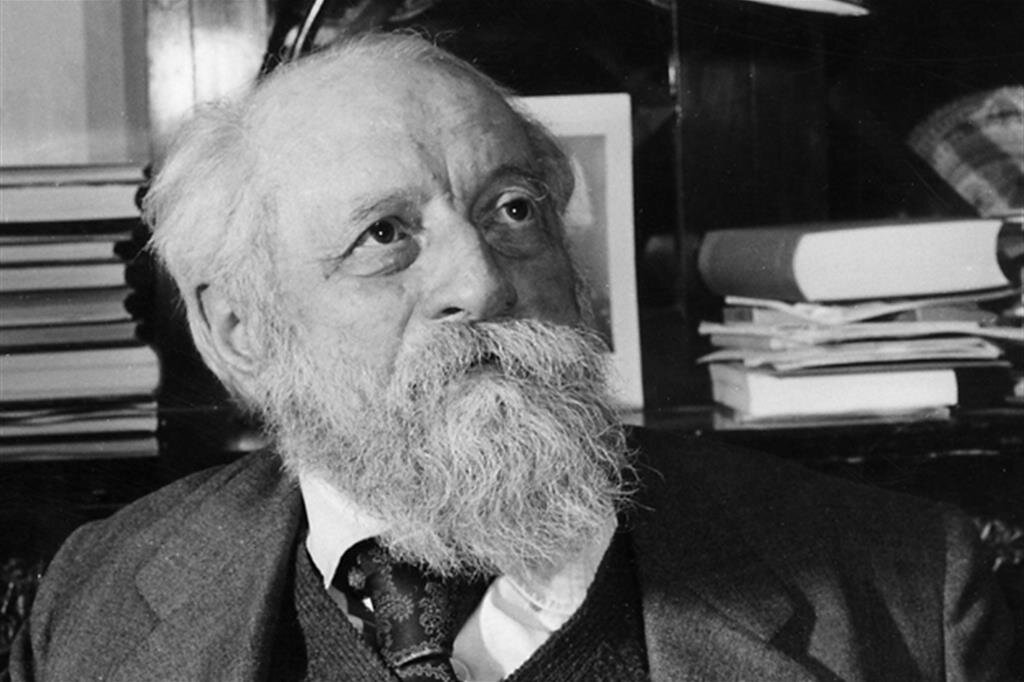
A philosopher from a Jewish family, born in Vienna and living in Germany until the rise of Nazism, after which he moved to Jerusalem.
Buber was a philosopher, but his writings contained the beauty of poetry rather than the coldness of speculative reasoning. His teaching remains fundamental even today. His philosophy is based on the idea of the human being not as a self-contained substance. According to Buber, man is the dense web of relationships he establishes with everything around him. What Buber could not have known, but what I like to imagine he sensed about our essence, is that we are in fact networks without a centre. Even inwardly, where we are more space than substance, we probably have no central "I-True Self", but are the result of billions of entities (neural networks) interacting with one another.
Buber's greatest teaching, however, is explicit. The quality of our life is not determined by the number of relationships we establish, but by their quality. He uses two categories that he calls "I-Thou" and "I-It". By "It" he did not mean "things", but relationships with what is other, emptied of humanity and subjectivity and purely quantitative. These relationships are exactly the kind that develop with the digital and the virtual. Relationships that have only a false semblance of the human and are destined to become totally hollow. Anyone who wishes to save their essence and their beauty need only return to face-to-face relationships, where we look each other in the eye, touch, embrace, slap one another and kiss.
Two gazes that meet in fact encounter the eternal, where space and time cease to exist.
m.m.
STORIES is a column dedicated to great stories from the past that can inspire your present.