
STORIES: Il falso uccello e lo sposo stregone
Marco Mandrino
How often does the answer arrive before the question has even become clear to us? How often does our reason have to stop, hemmed in by the narrow confines of logic and intellect? And how far are we still able to get in touch with what we might call “intuition”? Very often, intellect and logic are walls we crash into. We stop right there, at whatever is rational in the strictest sense.
Many philosophers have divided these different human faculties: one we might call “intellect”, which refers to logical, scientific knowledge, and one we might call “reason”, which also embraces what we might call intuition, something that goes beyond logic and beyond thought in its abstract, speculative form. In today’s language, however, we use the word “reason” to identify only what belongs to the scientific mind, entirely neglecting all those forms of knowledge that are proper to the human mind but are something completely other than logical reasoning, which is always and only “if A then B”, made of absolutes, of black and white, of TRUE and FALSE, of 1 and 0. And yet the mind, in union with the body, is so much more: it picks up on nuances, sensations and emotions, it tells good from bad, beautiful from ugly, what does us good from what does us harm, it finds connections, it is open to intuition and to ideas, and it is able to create and to perceive.
Today, contact with this form of knowledge, which for most philosophical and religious traditions is the most important and highest of human nature, is often relegated to superstition or ignorance. We no longer place ourselves in observation and listening to what comes towards us, and we are often completely blind to the many apparently random messages that appear before us. Constantly searching for material objects to accumulate, rushing to imitate plastic role models, connected to screens that have the answer to everything, we are no longer able to read anything of what happens to us. And the current trend is to weaken this human side ever more, keeping us distanced, far from nature, ready to believe only what is presented to us as scientifically proven.
Here, I would like to make a point about this: the cerebral cortex, where rational, logical thought resides, is the most recent part of our brain. It gives us access to a form of knowledge that is perhaps the least ancient of all those we possess – just think of recognising facial expressions, or reacting in the face of danger. In general, when we are in a highly complex situation, leaving judgement and knowledge solely to the rational part can be extremely limiting and lead us down the wrong path.
Very often we can find answers where we would least expect to find them. But we must be able to listen, to see, to feel.
Lately I often find myself questioning this and letting some things simply happen, following what seems random to my logical side. I have a book in which I often look for answers, unusual though it may be: the collection of fairy tales by the Brothers Grimm. Just yesterday I opened it at a random page, and the tale “Il falso uccello e lo sposo stregone” (“The Fowler’s Fowl”) appeared before my eyes. In itself the title didn’t tell me much at first, but as I read I recognised it. It is the Grimms’ version of the tale of Bluebeard. It is the second time in a short while that I have come across this story, of which there have been countless retellings and interpretations, from the most psychological to the most historical.
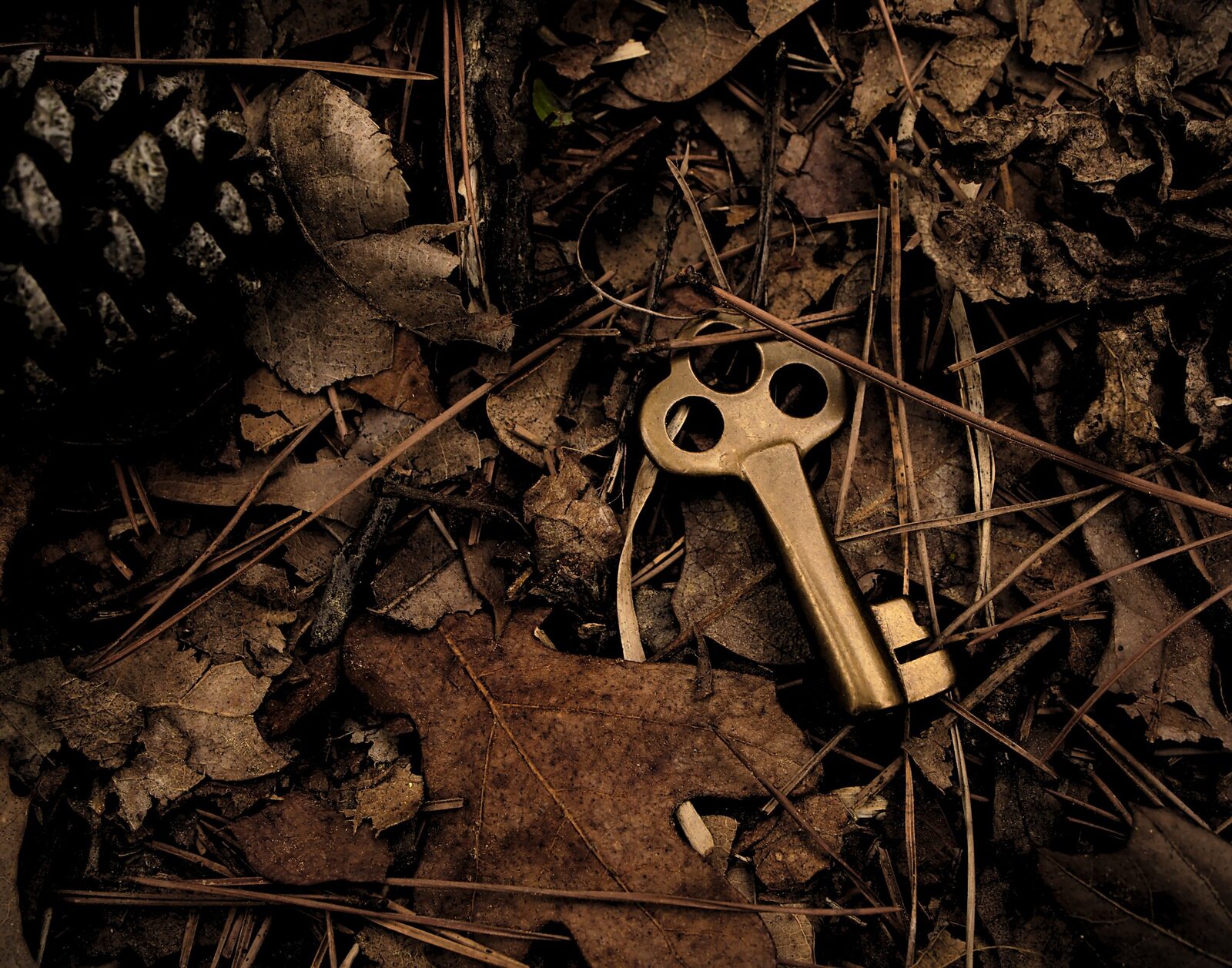
And it is with this suggestion, and with an invitation to read this tale (which I include below at the end of the article), that I conclude. Be careful not to give it only a superficial skim, because in this fairy tale there are very powerful symbols, such as the key, the blood, the egg, the door. It is a tale that speaks of the power of the feminine, even if at first glance it might seem the opposite. It is a tale about the curiosity to want to go further, with the risks that come with it. It is a tale in which a key gives us access to a forbidden truth, which becomes painful and can lead to death, but which it is also essential to discover so that it may become saving. In this tale we find all the courage and strength that spring from access to Knowledge.
Does truth put us in danger? Yes. To reach the truth we need curiosity, courage and a key. Very often there is someone who does not want that key to be used, who forbids it. And only those with great courage open the door anyway. It is certainly risky, but it is perhaps what we are here for, living day after day. At a time of closed doors and forbidden rooms like this one, let us read this tale keeping the doors of our mind open (and not only those of logic), and let us find again the courage to use the key that each of us carries within, in order to be free once more.
Alice K.
Il falso uccello e lo sposo stregone (Fratelli Grimm)
Once upon a time there was an old wizard who, taking on the appearance of a beggar, went from house to house asking for alms and carrying off pretty girls. Nobody had any idea where he took them, or what became of them, because they never came back. One day he arrived at the door of a man who had three lovely daughters. The sorcerer looked like a poor wretch and carried a basket on his back, as if to collect in it the gifts he received. He begged for a piece of bread, and when the eldest daughter offered it to him, he barely touched her and she was forced to leap into his basket. Then the sorcerer strode off and carried her to his house, which stood in the thickest part of the woods. Inside, everything was dazzling; he gave her everything she longed for and said: "Sweetheart, you will surely like it here with me, you shall have everything your heart desires."
This went on for a couple of days, and then he said: "I must go away and leave you alone for a while. Here are the keys to the house; you may go anywhere and look at everything, but not into the room that opens with this little key. I forbid you to enter there, on pain of death." Then he handed her an egg and said: "Keep it safe for me and always carry it with you, because if it is lost, great misfortune will follow." She took the keys and the egg and gave her word that she would do everything properly. When he had gone, she wandered through the house from top to bottom; the rooms gleamed with silver and gold, and she thought she had never seen such wealth. At last she came to the forbidden door and meant to walk on past it, but her desire to know gave her no peace. She looked closely at the key; it seemed a key like any other. She slipped it into the lock, turned it a little, and the door swung wide open. But what did she see as she went in? In the middle of the room stood a basin full of blood, and in it lay dead bodies cut to pieces; beside it was a block, and on the block, an axe. She was so frightened that the egg she was holding fell into the basin. She fished it out and washed the blood off, but in vain: the blood reappeared at once. She washed and scrubbed, but could not get it off. Shortly afterwards the man came back from his journey and immediately asked for the key and the egg. She handed them over, trembling all over, and from the red stains he saw at once that she had entered the bloody chamber. "You went in against my will; now you will go in against your own." He threw her inside, seized her by the hair, laid her head on the block and cut it off, and her blood ran across the floor. Then he threw her into the basin with the others. "Now I shall go and fetch the second one," said the sorcerer.
And disguised as a beggar, he went to the poor man's house to ask for alms. The second daughter brought him a piece of bread, and he seized her too with a single touch and carried her off. Her sister fared no better: she gave in to curiosity, opened the blood-stained room, looked inside, and when the sorcerer returned she had to pay with her life. He went to fetch the third, who was prudent and shrewd. When the man gave her the key and left, she first of all put the egg somewhere safe, then looked over the house, and finally went into the forbidden room. Good heavens, what she saw! Her dear sisters lay in the basin, pitifully killed and cut to pieces. But she searched for the scattered parts of their bodies and gathered them together: head, body, arms, legs. And when nothing was missing any more, the limbs began to move and joined together again, and both girls opened their eyes wide and were alive once more. Then they celebrated, kissing and embracing one another. When the man came back, he immediately asked for the key and the egg, and since there were no traces of blood, he said: "You have passed the test, you shall be my wife." In this way he no longer had any power over her and had to do whatever she wished. "Very well," replied the girl, "but first carry a basket of gold to my father and mother, and carry it yourself on your back. In the meantime I shall make the preparations for the wedding." Then she ran to her sisters, whom she had hidden in a little room, and said to them: "The moment has come to snatch you from danger. That wretch will carry you home himself, but as soon as you are home, send me help." She put them both in the basket and covered them with gold so that they could not be seen. Then she called the sorcerer and said to him: "Carry the basket, but I shall be watching you from the window, and woe betide you if you stop or rest." The sorcerer lifted the basket, put it on his shoulders and hurried off, but it was so heavy that the sweat ran down his face. Then he sat down, wanting to rest a little, but one of them cried out from the basket: "I'm looking out of the window and I can see you resting, get a move on!" He thought it must be the bride, so he got up and set off again. Once more he wanted to sit down, but at once he heard: "I'm looking out of the window and I can see you resting, get a move on!" And every time he stopped, one of them shouted and he had to run, until, breathless and half dead with exhaustion, he brought the gold and the girls to their parents' house. Meanwhile, at home, the bride was making preparations for the wedding and invited the sorcerer's friends. Then she took a skull with grinning teeth, adorned it with jewels and a crown of flowers, carried it up to the attic and set it by the window as if it were looking out. When everything was ready, she dipped herself in a barrel of honey, then split open a feather quilt and rolled around in it, until she looked like a strange bird and nobody could have recognised her. She left the house and, on the road, met some of the guests, who asked her:
"Where do you come from, happy little bird?"
"I come from the house of hen's feathers."
"And what is the young bride doing?"
"She has swept the whole house and is looking out of the window."
Finally she met the bridegroom himself, who was slowly making his way back home. He too, like the others, asked:
"Where do you come from, happy little bird?"
"I come from the house of hen's feathers."
"And what is my little bride doing?"
"She has swept the whole house and is looking down from the window."
The bridegroom looked up and saw the skull all dressed up. He thought it was his bride and gave her a friendly wave. When he was inside the house with all his guests, the bride's relatives and brothers arrived, having come to bring her help. Then all together they shut the doors and barricaded the windows so that nobody could get out, and set the house on fire, so the sorcerer and all his kin were burned to death.
STORIES is a column dedicated to great stories from the past that can inspire your present.