
Miguel Ángel Martín: censorship-proof comics
Marco Mandrino
Edited by Alice Kundalini - She Spread Sorrow
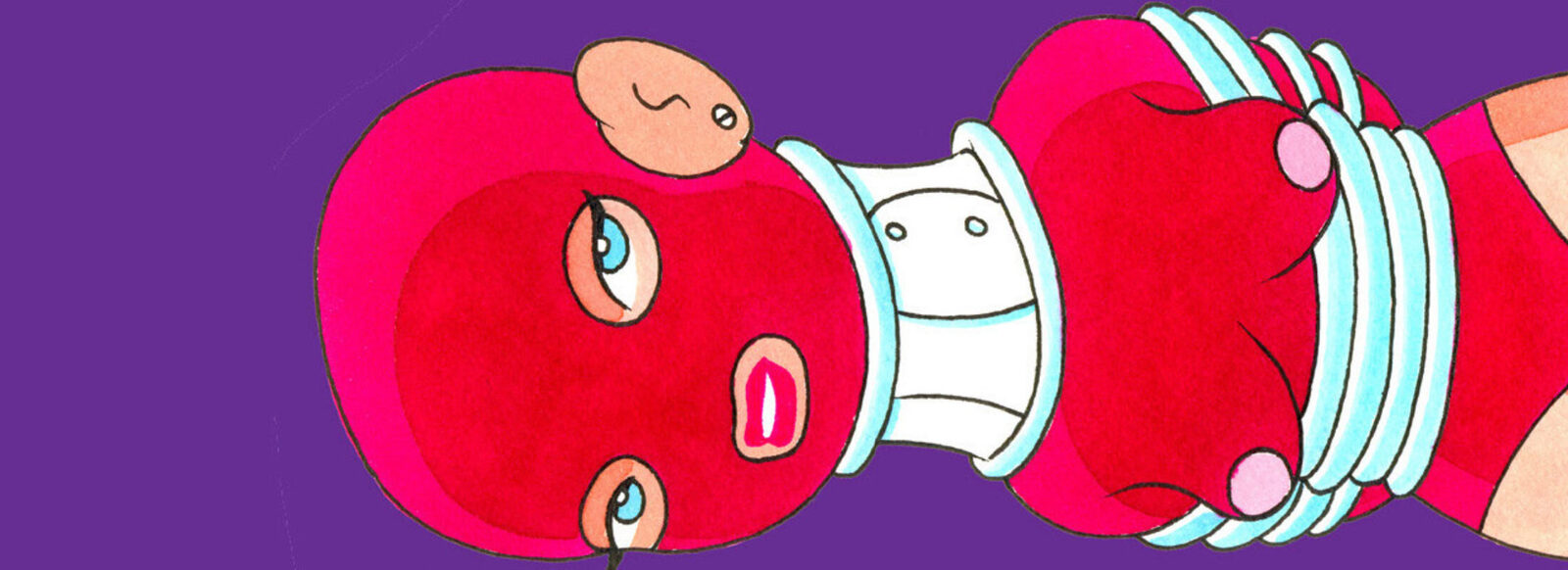
Today's pill is dedicated to a Spanish comic artist I adore, Miguel Ángel Martín (León, 1960). Very often we associate the world of comics with childhood or youth. We imagine magical tales populated by superheroes and fantasy characters, taking us to a distant, enchanted world where good triumphs, where a clear morality reigns supreme, made up of goodies and baddies, protagonists and antagonists. And yet, even in the world of comics, there are those who step outside everything we might expect, to move in totally different territory. “The most violent and repulsive comic ever drawn” exists. The remarkable thing is that its author has been considered by The Times as “the best European comic artist” and included by The Face magazine in its list of the “50 artists of the century”. And that is precisely Miguel Ángel Martín.
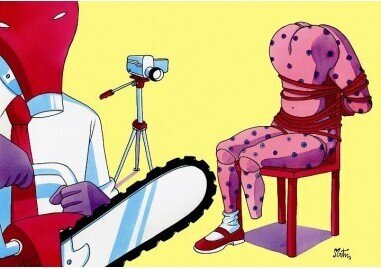
Having started out drawing strips that were already extremely controversial for various newspapers in the 1980s, in 1995 Martín published Psychopathia sexualis, which is indeed described as stated above. Not only that: published in Italy by Jorge Vacca's Topolin Edizioni, in 1996 it was seized and censored in its entirety, with criminal charges brought against the publisher for aiding and abetting paedophilia. Charges that, of course, were dropped years later, in 2001, on the grounds that “il fatto non sussiste” (the act did not occur). The public prosecutor in the trial described the volume as “obscene and horrifying, in that the violence in it (murders, dismemberment, suicides), depicted in the most shocking and gruesome forms, is exalted as a means of satisfying the most abnormal sexual perversions”. It is strange to think that such heavy-handed censorship was unleashed by a comic, which in fact gained perhaps even more notoriety and success from it. And this wasn't the 1950s, but the eve of the new millennium. Psychopathia sexualis takes its title from a medical treatise published by Richard von Krafft-Ebing in 1886, which collects forms of sexual deviance through the analysis of around 500 clinical cases. Well, who wouldn't have thought of turning it into a comic?! Joking aside, Miguel Ángel Martín's Psychopathia sexualis is inspired by this, and is a collection of stories, very often drawn from real crime cases, such as those of certain serial killers (including John Wayne Gacy and Ed Gein), in which every one of the most extreme and disturbing forms of sexual deviance we can imagine is illustrated. From zoophilia to necrophilia and paedophilia, by way of atrocious violence, abuse and death. But don't worry, we are still talking about drawings, which tell true stories that, mind you, are not celebrated but recounted in all the necessary rawness, with no frills, without sugar-coating the pill, but giving us a good punch in the stomach, loud and clear.
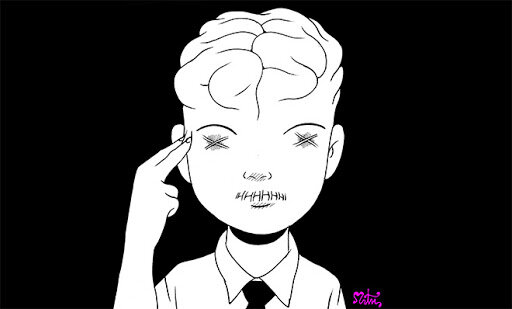
Psychopathia sexualis is not Martín's only work. His Brian The Brain (1990-1993, also published in Italy by J. Vacca's Topolin) is very famous: a delicate and moving story of marginalisation and loneliness, of injustices suffered and questions about progress. In an unspecified future, which only seems distant because it shares so much with our present, a boy, as a result of experiments carried out on his mother, is born with his brain exposed outside his head and with powers such as telepathy and telekinesis. His are the adventures of a decent boy in a degenerate world, where it is hard to find a place to feel at home.
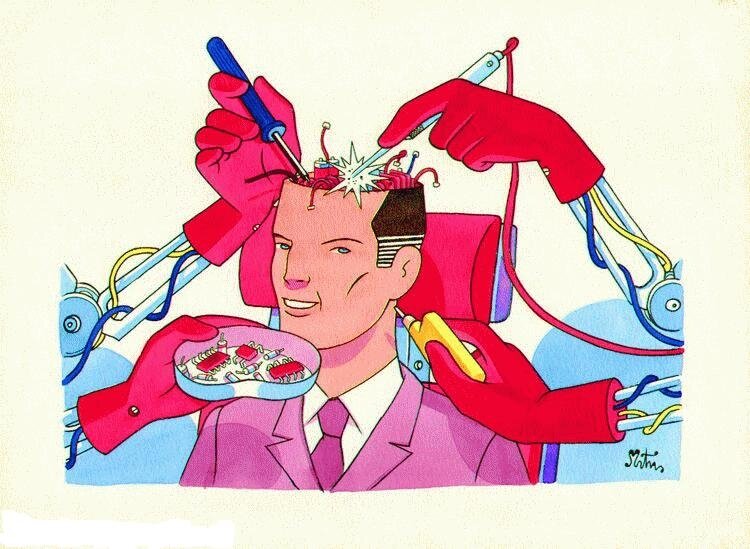
Later works include Anal Core, Bitch, Cyber Freak, The Space Between, Rubber Flash and Snuff 2000. The themes, clear from the titles alone, point to a recurring aesthetic and set of contents, an investigation into what always lies beyond morality, in distorted, dystopian futures that, sadly, we often feel are so close, where there is no room for what is right, beautiful, healthy, sensitive, fragile, but where perversion, deviance and violence, often hand in hand with power, science and information, win out in a clash where death is not the worst of the evils on offer.
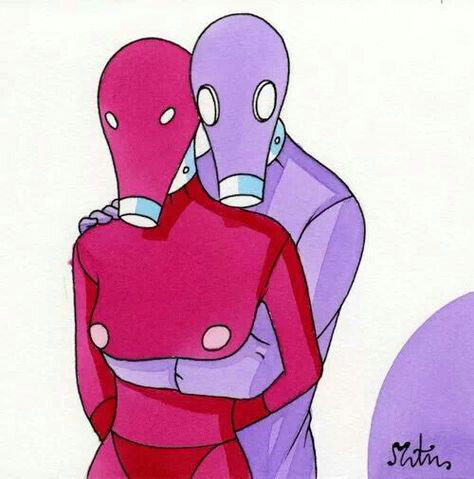
Censorship is something to be rejected always. Freedom of thought and expression is one of the most important values, now often pushed into second place by economic interests, more than moral or religious ones. This is also why, and not only out of passion, I chose this pill. Martín's language is explicit, harsh, violent, with no half measures, extreme in its content, but the message of his works is always extremely clear and strong, and cries out for attention to the degeneration of today's society, to the rejection of every value in the name of instant pleasure and power. For me this is more useful to keep on the bedside table, as a contemporary lesson in morality, more than many others, often resting beside beds where the “psicopatie sexualis” are not drawings but, sadly, realities we don't want to see. Be careful about looking for evil where it is explicitly told, because evil, the real kind, is kept secret, hidden behind do-gooding, hypocritical, false and often moralistic facades.
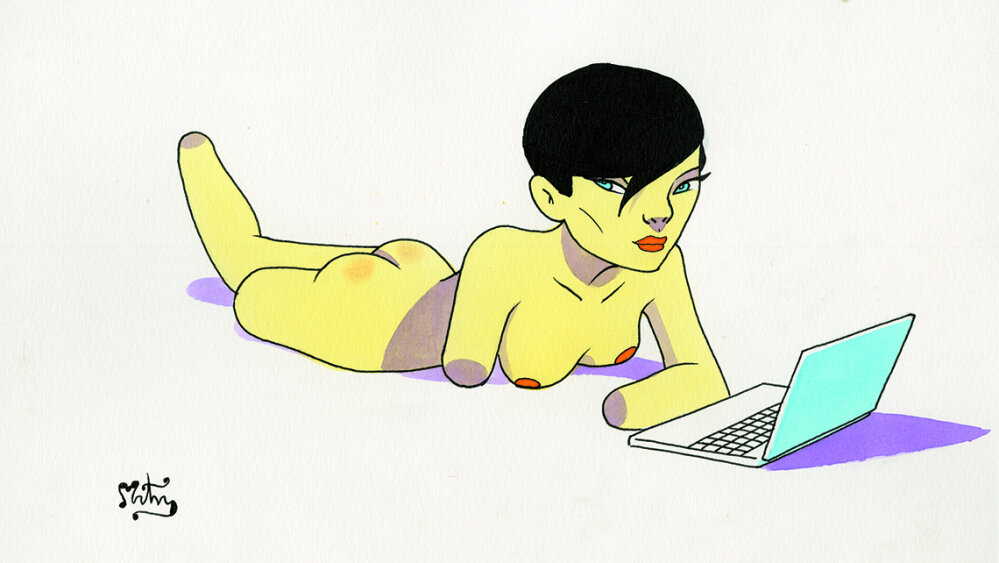

Black Pills is a column that does not set out to teach anything. There are books, articles and manuals that deal with the biographies of artists, films and works of art in a detailed and exhaustive way. This is not one of those cases. The black pills are small glimpses of cultural and artistic landscapes, at times very broad, which offer the chance to explore themes that do not entirely belong to mass culture, but move along other channels and other circuits. In a world where the choice is often limited to what is defined, in the broadest sense, as pop, I highly recommend taking a few pills of a different colour and perhaps discovering something new, which in some cases, as in mine, can stay with you for the rest of your life.