
My Christmas recipe
Marco Mandrino
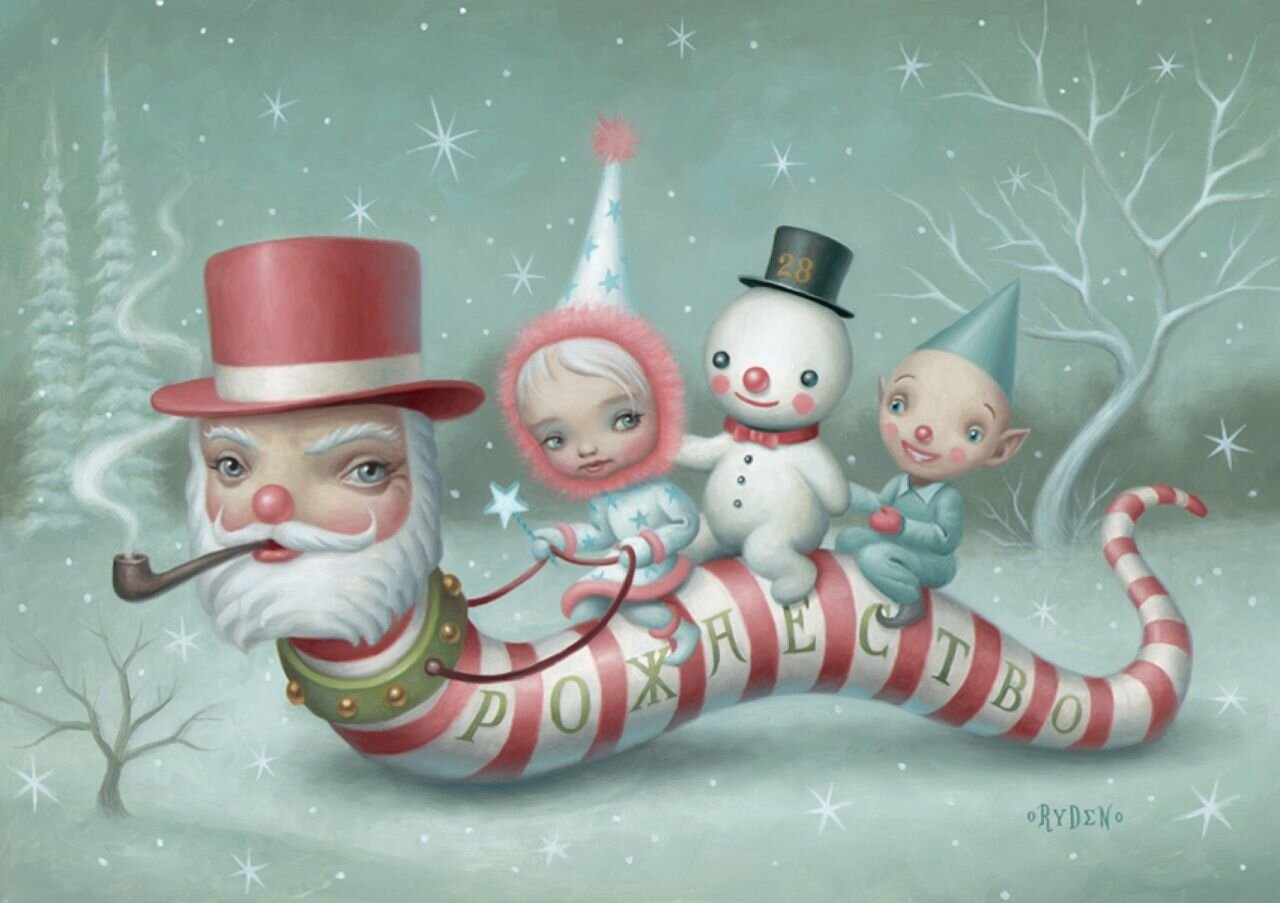
By Alice Kundalini - She Spread Sorrow
Christmas isn't an easy time of year for many people, myself included. The festive, familial, playful, colourful atmosphere, with its good feelings all wrapped up and stacked beneath the tree, has always made me feel uncomfortable, even though over the years I've learned to live with it. Of course, in 2020 that atmosphere is felt less, for obvious reasons, but, for me at least, it doesn't change the recipe for surviving the Christmas season that I've put together over the years and that I'd like to share in today's pill.
Let's start with the music. Needless to say, I'm not a fan of Christmas songs, but at a young age I discovered my perfect Christmas soundtrack: Laibach. A Slovenian band formed in 1980 and still active, they are the musical wing of the NSK collective, whose central focus is the totalitarian aesthetics of power, presented through a folkloric depiction of the oppression of the individual in the name of the homogenisation typical of the regime. It's a very complex theme to understand in any depth, as it is strongly tied to the collective's territorial origins and the history of their land. Between provocations, staging and 1920s aesthetics, the mix is rather disconcerting and disturbing, and a different kind of reading is needed in order not to stop at the most superficial level, which would lead many to label the band wrongly without having grasped the meaning of what is being offered. From the construction of the NSK State to being the first Western band allowed to perform in North Korea in 2015, I leave it to each person to explore the ideological aspects, if they feel like it, so that I can concentrate on what I can truly understand best: the music. Given their long career, Laibach have an extremely rich discography, not only in the number of releases but also in the variety of genres they've touched on. With a sound rooted in martial industrial, the unmistakable voice of Eber (Milan Fras) often joined or replaced by other singers, and a great many collaborations with musicians from outside the band, in the early records we find a noisier industrial (Nova Akropola), others with a particularly electronic sound (NATO), some tracks in which a certain four-on-the-floor kick drum is added to the martial feel, making them decidedly danceable (Tanz Mit Laibach on the album WAT, for example, leaves no doubt), records blending folk and electronics (Opus Dei), others with a more rock imprint (Jesus Christ Superstar), an album devoted entirely to national anthems (Volk, wonderful, which also includes their version of our own national anthem), and stratospheric covers such as Life is Life, Final Countdown or Across The Universe. And this last one is my Christmas song par excellence, thanks to its children's choir voices and the harpsichord that sounds like a music box (I know, it's not exactly Jingle Bells, but it's the best I can do).
And then we come to cinema. For me the Christmas film of all time and forever is Willy Wonka and the Chocolate Factory, the 1971 version by Mel Stuart, with an incredible Gene Wilder. Pure psychedelia, a magical world that takes me back to Alice's wonderland, where you run fast along the thin line separating what is odd, colourful, enchanted and sing-song from what is unsettling. I admit that one of the scenes I find most disturbing cinematically, despite the not exactly comfortable visions I'm used to, is Charlie's grandparents all four living together in the same bed without ever getting up. But that's my problem. Between Oompa Loompas and rivers of chocolate, this is definitely my Christmas film. I'd also add Nightmare Before Christmas and pretty much all of Tim Burton's films, and I thank him for bringing the darker side of fairy tales to the big screen (even if his Willy Wonka really didn't go down well with me). And even though it isn't exactly Christmas-themed, it's the perfect time of year for me to let myself be carried away by the enchanting poetry of Hayao Miyazaki's anime films.
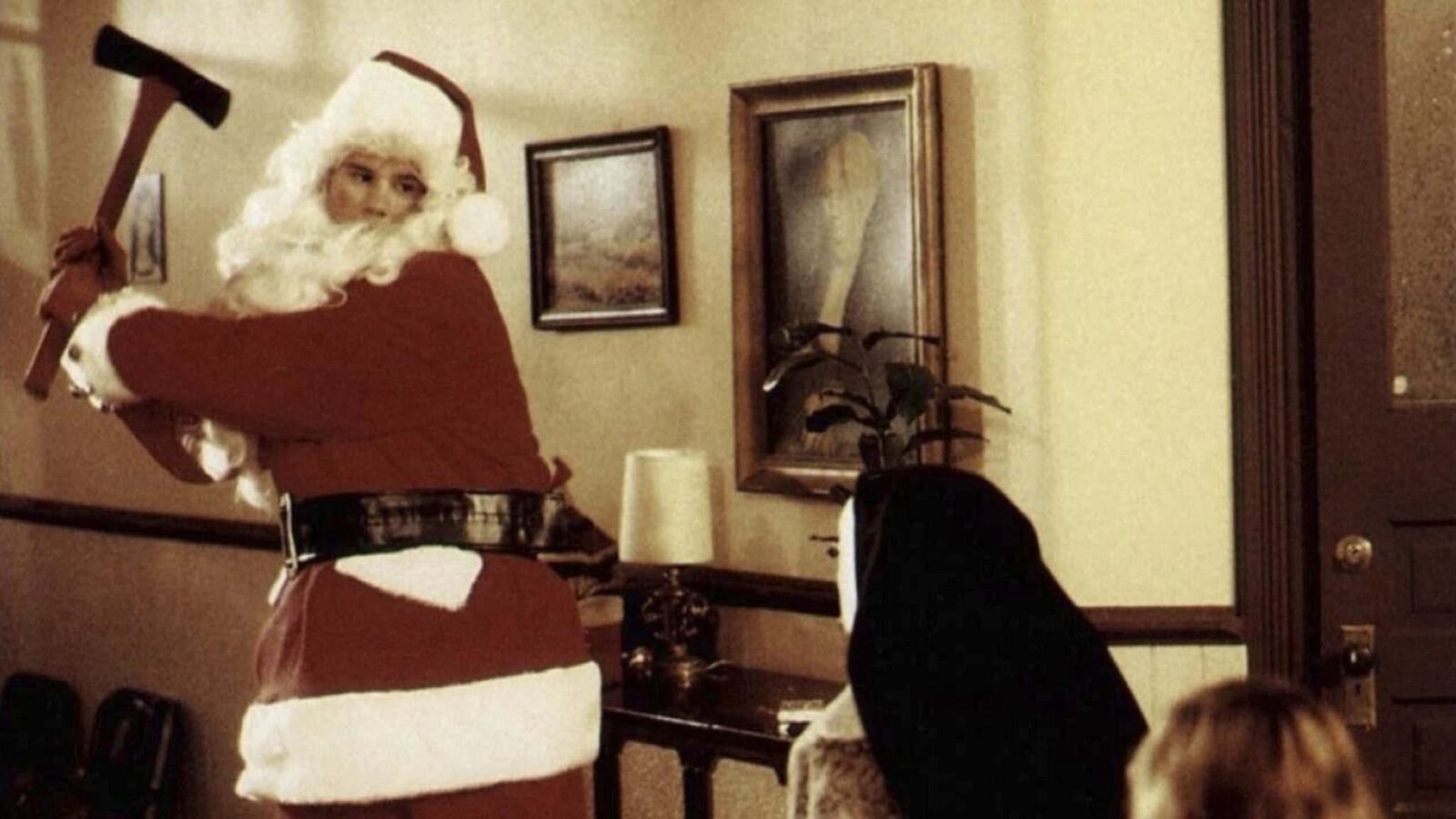
And then, of course, a good dose of Christmas horror films. There's something for every taste, and every year, depending on what you manage to find, it's the time to discover a new one. I'll list a few, besides the supercult Gremlins. We can find pitch-black fairy tales like A Christmas Horror Story (2015); ruthless Santas, for example in Christmas Evil (1980) or in Natale di sangue (Silent Night, Dealey night) (1984); parties that go the wrong way as in Why Hide? (2018); killer elves and dangerous gnomes, for example in Elves (1989) or the film of the same name from 2018 or in Gnome Alone (2015); zombies in Anna & The Apocalypse (2018); serial killers in Christmas Evil (1980); even an evil Jack Frost in the film of the same name by Michael Cooney (1997); the unsettling setting of a Lapland in Rare Exports - A Christmas Tale by Jalamari Helander (2010); not very reassuring babysitters in Better Watch Out (2016); psychopaths stalking young female students in Black Christmas - Un Natale Rosso Sangue (1974); children who ruin the festivities for everyone in The Children (2008) and many, many, many more. Many of these films aren't real masterpieces, let's be honest, but they certainly entertain and amuse, at least Grinches like me, and now and then a little gem turns up among them.
My recipe also includes a book, which has nothing directly to do with Christmas, but since it is set in a freezing cold Stockholm, in an icy, snowy atmosphere that is also fairy-tale-like and moving, for me it is ideal to reread at this time of year: Lasciami Entrare by John Ajvide Lindqvist. It's a story that is hard not to be moved by, in its sweet brutality, with a little girl vampire completely removed from the vampire style we might imagine. There is also a very good film adaptation, directed by Tomas Alfredson in 2008.
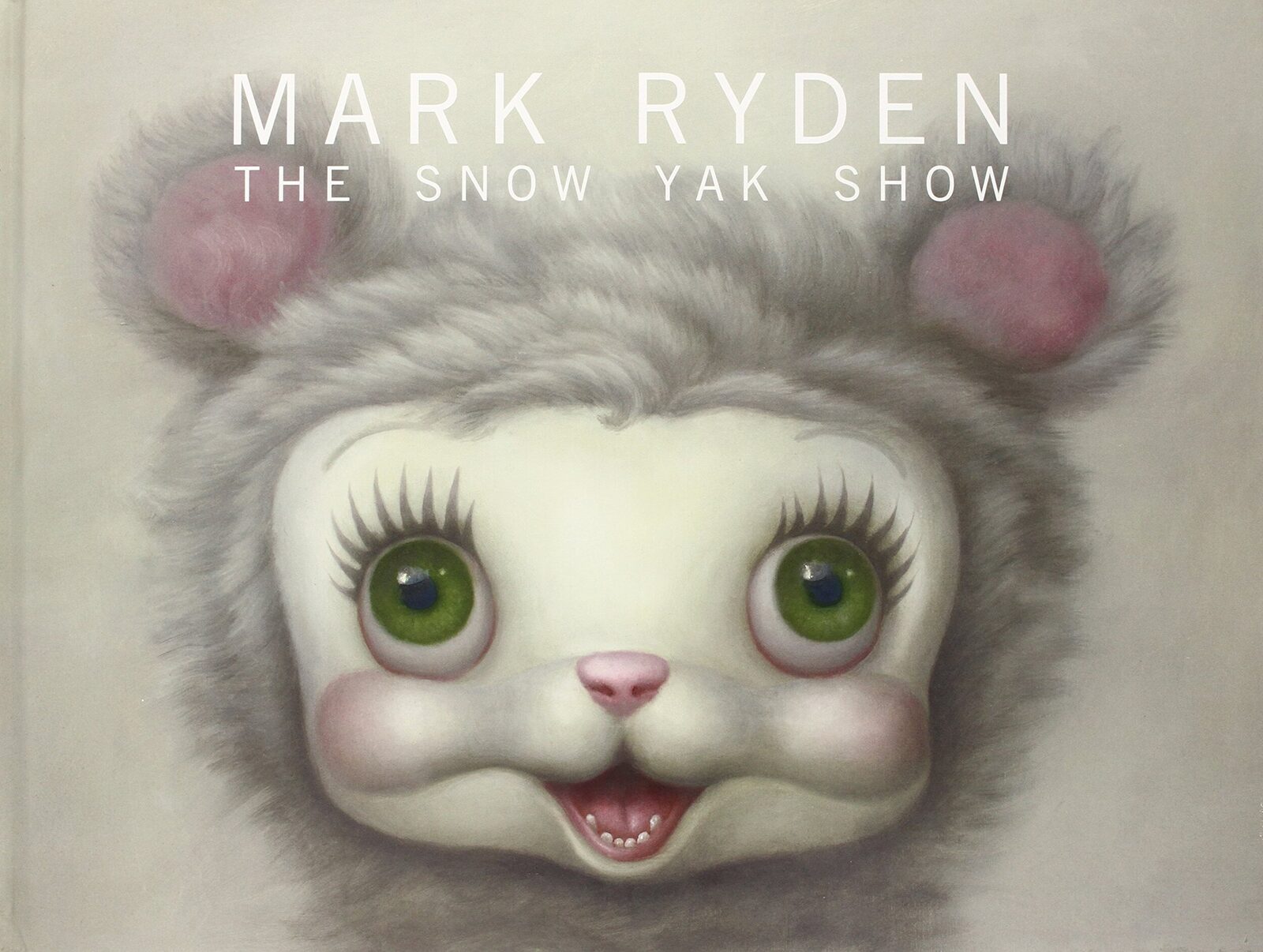
And finally, for cards, greetings or anything else, Mark Ryden's images are absolutely perfect! Not only themed works with snakes with the face of Santa Claus and portraits of the Grinch, but also the series all in white and snow, The Snow Yak Show.
And so, between vampires, blood, nightmares and music with an aesthetic somewhere between folk and "totalitarianism", here is my Christmas recipe. And from this you will surely have understood that in my family I never do the cooking, and I don't think I will even in this strange Christmas with the restaurants closed. Happy holidays to all!
Black Pills is a column that does not set out to teach anything. There are books, articles and manuals that deal with the biographies of artists, films and works of art in a detailed and exhaustive way. This is not one of those cases. The black pills are small glimpses of cultural and artistic landscapes, at times very broad, which offer the chance to explore themes that do not entirely belong to mass culture, but move along other channels and other circuits. In a world where the choice is often limited to what is defined, in the broadest sense, as pop, I highly recommend taking a few pills of a different colour and perhaps discovering something new, which in some cases, as in mine, can stay with you for the rest of your life.