
Blood-red summer
Marco Mandrino
Edited by Alice Kundalini - She Spread Sorrow
As happens during the Christmas holidays, the summer ones too bring back the urge to watch horror films. Madam TV, educator of the '80s–'90s generation, well aware of this, has always started offering us, in the July–August period, some rather chilling films in which happy, lively young people, ready to enjoy their holidays, are butchered by masked maniacs, sharks, piranhas, dark entities, dream characters and the like (more or less).
It would be interesting to investigate why most horror films come back into fashion, or centre on, the moments of life when we should be happy and carefree. As if a starting state of well-being could heighten the horror even further, its roots sunk in the collective unconscious: a frightening scene on an ordinary day of office routine would, for many, be just a portrait of everyday life, where the butchering of the unscrupulous boss or the annoying client are all-too-frequent mental journeys. And there is probably also that latent thought, rooted in the deepest coils of the spirit, often planted by catechists or similar figures, that, come on, happiness has to be punished a little. And the greater the happiness to begin with, the greater the horror of losing it. A sort of pre-emptive pessimism, which lies at the base of the lives of many, too many people.
In any case, summer horror films are by now reassuring and reliable companions, like the friends you had as a child when you went on holiday to your grandparents' house.
Unfortunately Madam TV has changed so much over the years, and lately I am far less up to date on what is on the 8000 television channels of today, and that's before counting all the digital platforms, a real jungle. But every year the tradition returns and here and there these old friends reappear, some of whom have aged quite well, others pretty badly, but who, like mosquito bites, are modern madeleines able to take you straight back to the summers of your childhood, when you tried to watch those films in secret while scratching yet another bite.
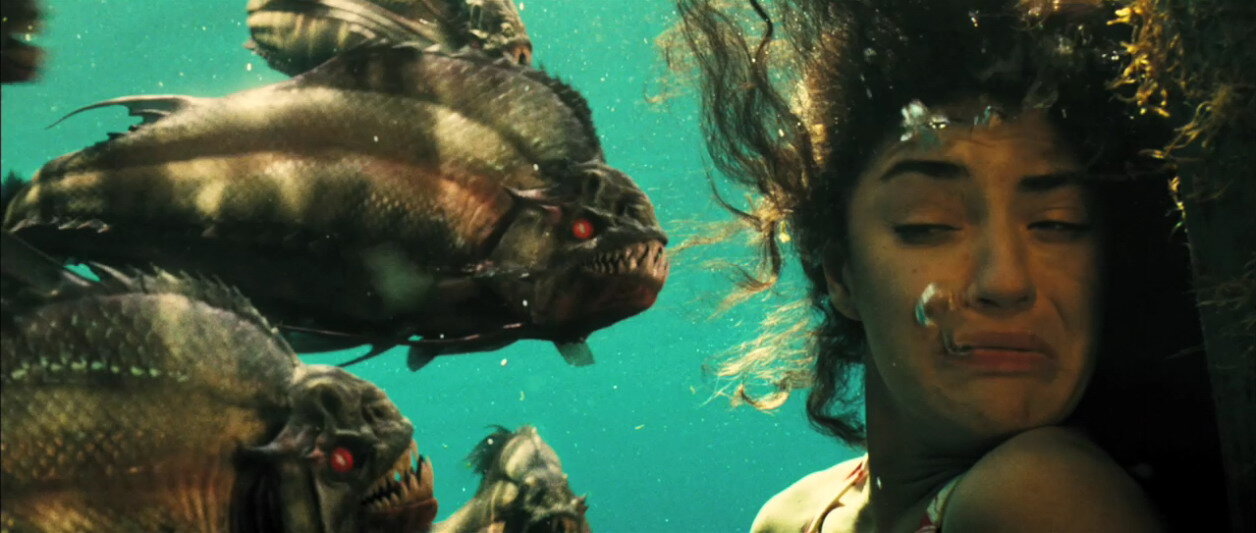
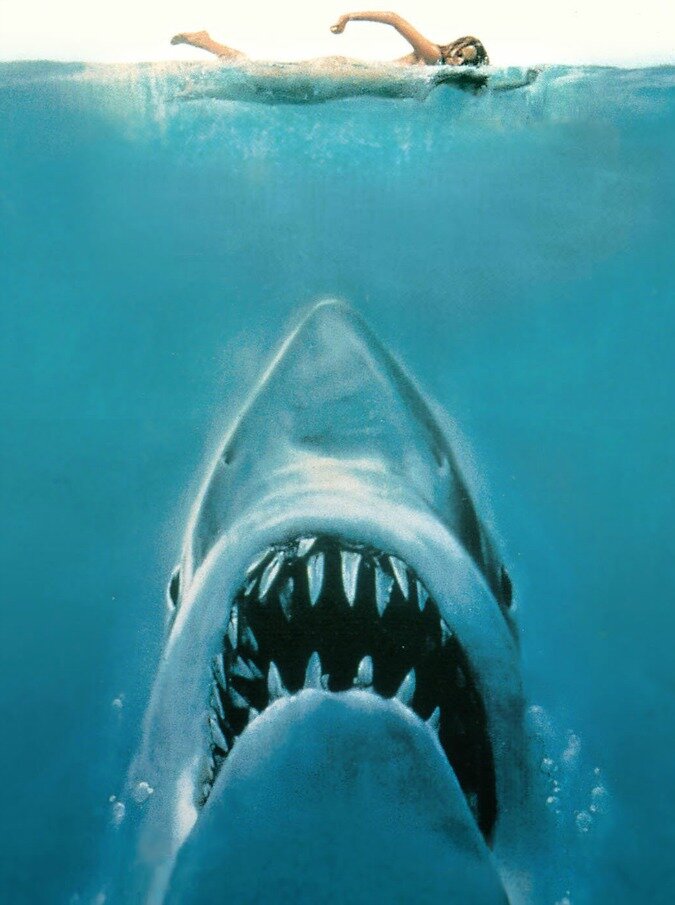
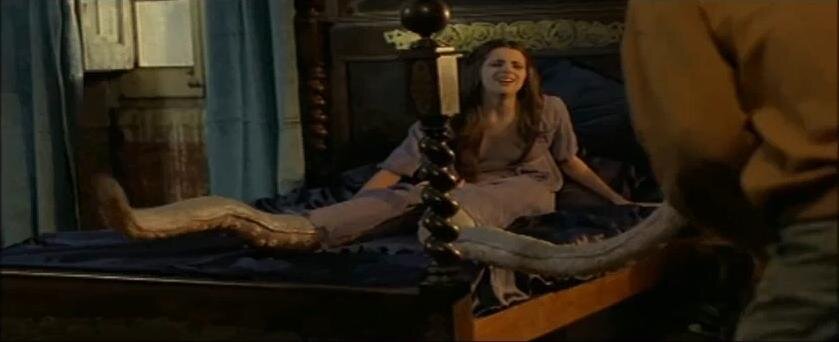
Obviously there are some unmissable classics to watch at this time of year. The first is, of course, Jaws, by Steven Spielberg, which has been terrifying us since 1975. And in my opinion there can be no proper summer without passing through its jaws and the red patches that turn the sea from a place of fun into a sweet slaughterhouse. The same goes for Piranha from 1978. Other masterpieces (in their own way) of the “sea creatures ready to ruin our lives (or end them)” genre are Tentacles (1977) and Orca: The Killer Whale (also from 1977).
In the vein of ruined seaside holidays, you could mention dozens and dozens of films: Spiaggia di Sangue (which is more or less the description I would give to my own moments on the coast); Monster – Esseri ignoti dai profondi abissi (1980), in which the enemies are mutant creatures, half man and half fish; the various sequels and spin-offs of Jaws: there's something for every taste, Shark 3D, Open Water, Shark Tale, Sharknado, Shark Attack, and so on and so forth.
As for mutant creatures, mermaid-style but very horror, I'll mention the fantastic Dagon – La mutazione del male by Stuart Gordon, from 2001, inspired by the stories Innsmouth and Dagon by Lovecraft. But let's not forget that the water doesn't hold only dangerous fish and mutant creatures, but also bacteria and pathogens that spread atrocious, deadly diseases, as in the terrifying The Bay from 2012.
But the threats don't come only from the sea; there's another big problem too, that of maniacs. Their favourite prey are young people enjoying their holidays (and who could blame them), so here another immense chapter opens up, which, incidentally, moves from the sea to other settings, usually more wooded or desert. It's a theme that anyone who has been to the United States can't help having wondered about: places lost in the middle of nowhere. And not just a bit isolated, like, I don't know, Calamandrana, but properly, truly in the middle of nowhere. In the United States it happens that you drive for 2, 3 or even 4 or 5 hours without meeting the slightest glimmer of civilisation, apart from some desolate petrol station, with a rusty sign and an owner with no teeth (true story). And on these journeys of 2, 3, 4, 5 hours you may see a few letterboxes (suggesting that a few kilometres from the road, inland, someone is receiving post), disturbing signs about Jesus, wooden boards with telephone numbers painted on them offering various services (above all tattoos), but without a single building in sight as far as the eye can see, and then caravans and mobile homes, totally isolated. When you see them you can't help thinking: “How on earth do they live here? What do they do? Who do they see?” The answer can only be: “They kill people”. There can be no other explanation. And let's add that those are places where you really do disappear; that is, it's unthinkable to find a missing person in desolate expanses of that size.
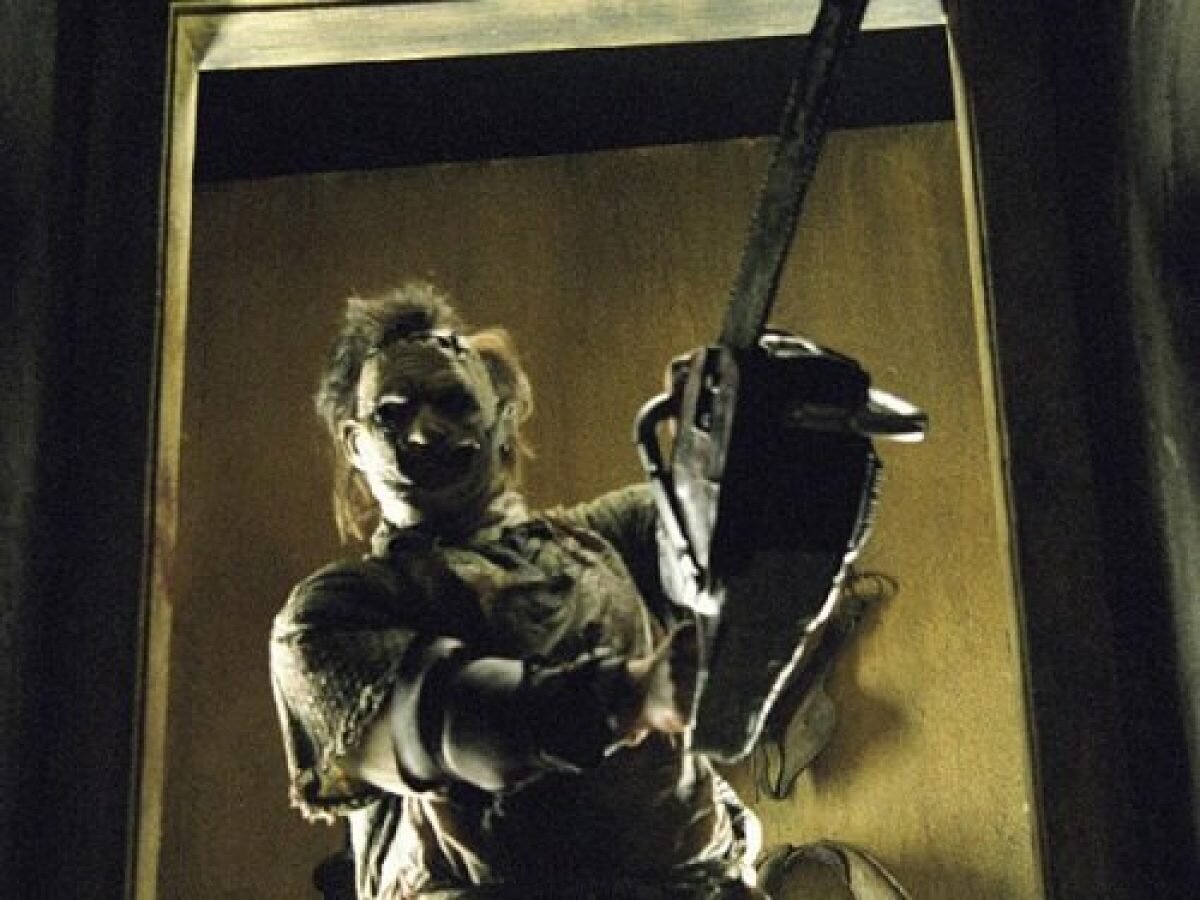
So it's no surprise that there are so many films, some of them real cult classics, based on this assumption. For example The Texas Chain Saw Massacre, by Tobe Hooper from 1974 (of which there is a decent remake from 2003), one of my favourite horror films of all time, in which the famous Leatherface appears, the maniac with the mask made of human skin, inspired by the true story of the serial killer Ed Gein. But also The Hills Have Eyes (1977, remake in 2007), whose title is the best explanation of the feeling you get in the places described above.
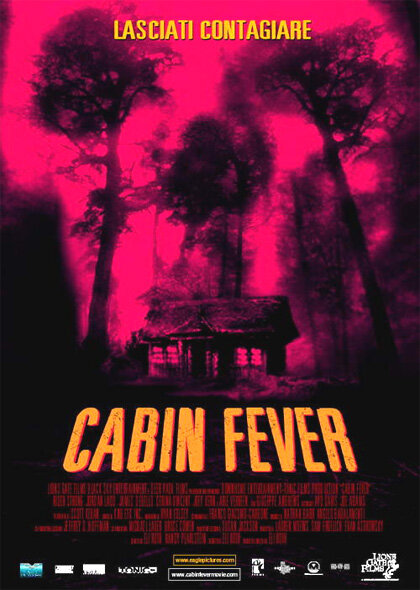
Among the woodland holidays gone wrong we find many other cult films, one above all: The Blair Witch Project (1999). For lovers of splatter/gore, Cabin Fever by Eli Roth, released in 2002, is not bad at all either. I'll also mention Calvaire, a truly disturbing horror film, not very easy to track down because it's quite extreme, set not in American desolation but in those woodland landscapes that we can find just a few kilometres from home, in villages populated by violent yokels, hunters far from civilisation, fond of drinking too much and, in Calvaire, also of bestiality, violence and murder.
Other great cult films with a woodland setting are The Evil Dead (1981 by Sam Raimi) and Friday the 13th (1980 by Sean S. Cunningham), with their respective sequels. And then dozens and dozens of films, for example: The Cabin in the Woods; Wrong Turn; Eden Lake; Broken; Il Bosco dell’Orrore; and so on and so forth.
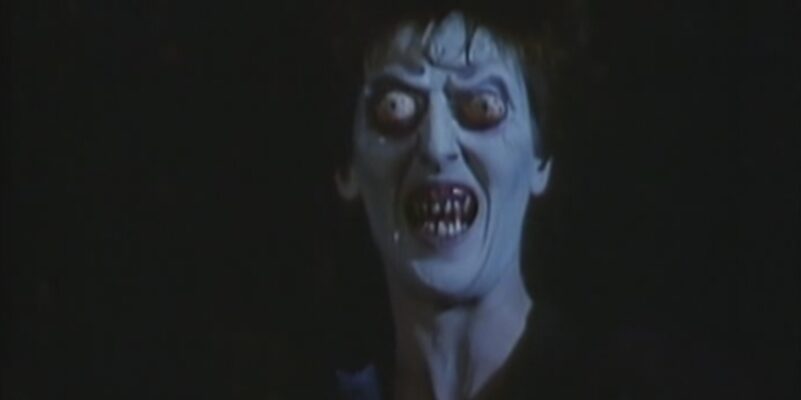
I'll mention another gem in a league of its own, namely the fantastic trash-cinema masterpiece Il Bosco 1 (1988). It isn't a typo, that really is the title: at the time of its release a sequel was already planned, so they wanted to specify the number right from the start. In the end there is no trace of the sequel, apart from statements by the director Andrea Marfori, who on repeated occasions claimed it was on its way, without anything ever actually materialising.
Let's move on to another theme to tackle: the mysterious Eastern Europe, unsettling not only because of the presence of vampires. Especially in the American imagination, Europe is the true land of freedom. That is, for us Europeans the Land Of Freedom is the United States, but for them real freedom is the European kind, meaning sexual freedom, whose highest expression for the average American is topless sunbathing and nudist beaches. This leads many young people to travel around Europe, especially to the east, where this freedom often turns into prostitution, which isn't quite the same thing as free love, though perhaps for Americans it is. And here we come to Hostel, another real cult film by Eli Roth, in which, like in few other films, the holiday goes from good good to bad bad bad bad, but really truly bad, in an Eastern European setting made of girls and fun, but above all of torture, unimaginable violence, litres of blood, merciless men and corpses.
No sea, no woods, no Eastern Europe, but if you think of taking refuge in the world of dreams, know that even that isn't well populated. Another saga of films that go down a storm in summer is the various Nightmare films, the first released in 1984, directed by Wes Craven and starring the very famous Freddy Kruger, who, with his melted face and dagger fingers, comes looking for you directly in the world of nightmares, but with immediate effects in reality. Even now I'm sure it's better not to dream of him anyway.
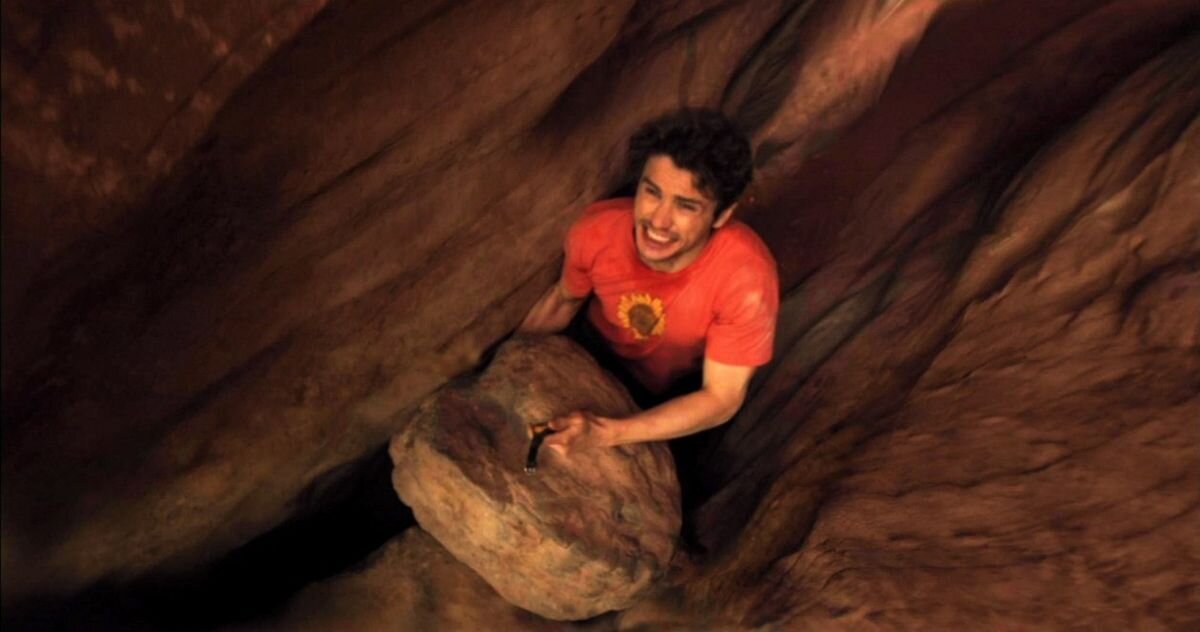
Nor should we forget lovers of hiking, who may run into another potential danger: falling somewhere and getting stuck there, as in the 2010 film 127 Hours by Danny Boyle. Based on a true story, it tells of a young man played by James Franco who falls into a canyon in Utah during a hike and stays trapped there, for 127 hours indeed, resorting to extreme acts that during screenings in cinemas caused quite a few people to feel unwell, and even an epileptic fit among the audience.
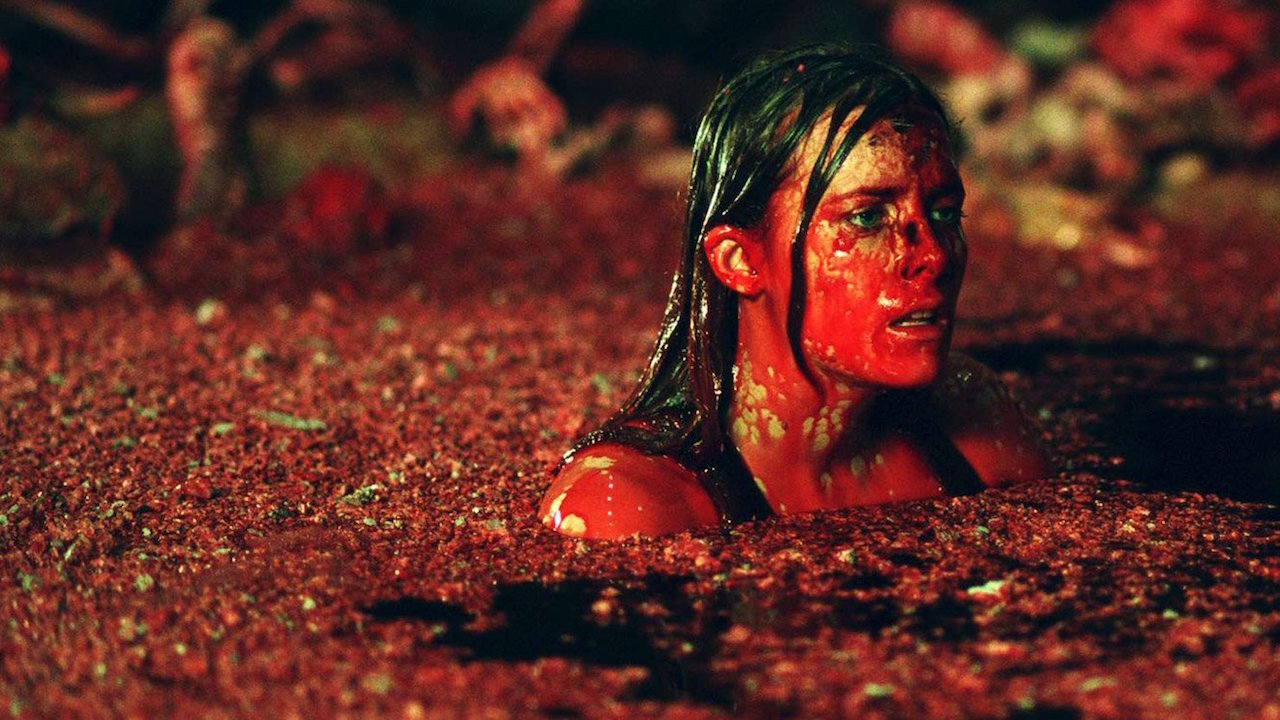
But you can also get stuck in a cave, as in the chilling The Descent – Discesa nelle tenebre (2005). Or in an underwater cage, as in 47 metri, a 2017 film, which adds another big problem, one that magically brings us full circle: sharks.
Obviously one could mention thousands of other films, so rich is the landscape. Many different summers await us in which to get passionate about lots of different films, even though most of them remind us that this summer could be our last. I know you're all making various superstitious gestures, but don't blame me. I recognise Zio Tibia as family more than some people I share part of my DNA with, and as a good niece I can only wish you “a terrible summer”.

Black Pills is a column that does not set out to teach anything. There are books, articles and manuals that deal with the biographies of artists, films and works of art in a detailed and exhaustive way. This is not one of those cases. The black pills are small glimpses of cultural and artistic landscapes, at times very broad, which offer the chance to explore themes that do not entirely belong to mass culture, but move along other channels and other circuits. In a world where the choice is often limited to what is defined, in the broadest sense, as pop, I highly recommend taking a few pills of a different colour and perhaps discovering something new, which in some cases, as in mine, can stay with you for the rest of your life.