
David Cronenberg: flesh, mind, violence, reality
Marco Mandrino

By Alice Kundalini - She Spread Sorrow
I saw my first Cronenberg film when I was a teenager. The film was eXistenZ and I was 16. A very particular age, the one in which your body changes and transforms, in which you learn (or try) to get comfortable with it, even though it feels utterly alien. An age in which you also begin to discover other people's bodies, always wavering in the balance between the desire that is ferrying you towards adulthood and the curiosity, mixed with irritation, that you carry with you from childhood.
I mention this because discovering Cronenberg at precisely this stage of life can be either extremely disturbing or utterly attractive. And far more often, both things at the same time. For me, who in that period of choosing between black and white always opted for black, the sense of unease his films gave me made me fall in love straight away. Through eXistenZ I discovered an entire world, that of a director who is profoundly carnal and carnally profound.
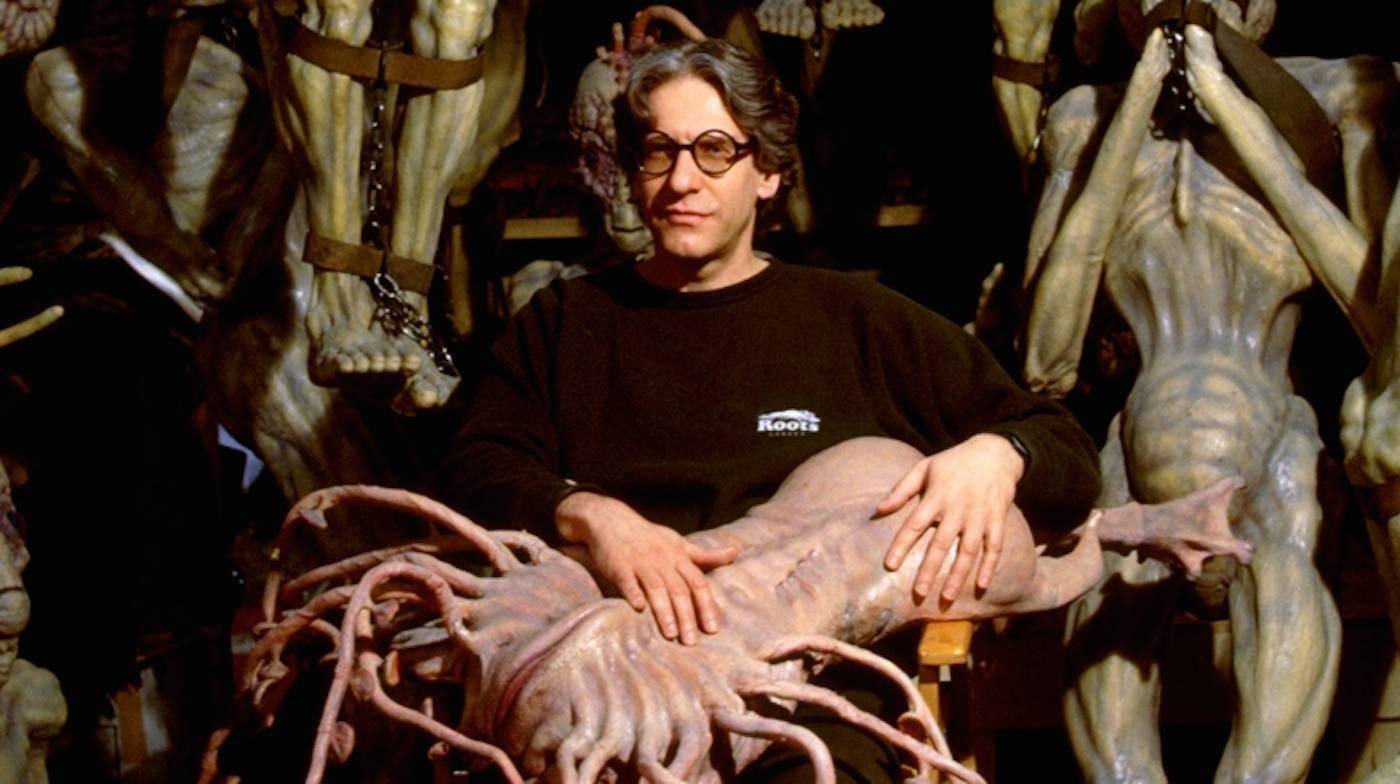
Through the body and its mutations he charts journeys that waver between horror and eroticism, in a mix I have always found absolutely brilliant, in which the attractive and the disturbing lose their boundaries, in bodies that mutate and deform, amid mutilations and transformations.
Cronenberg has made many films and I don't want to dwell on tracing his filmography; you could write a book about it. Instead I will focus on what struck me most about his films and his aesthetic. Like all great directors, his language is recognisable and unique.
The early films are fairly extreme. Limited budgets, strong images, perhaps more from a visual than a psychological point of view, sometimes almost spilling over into horror. The mutation of the body is the theme that emerges most prominently in these first works, so forcefully that it almost seems naive. Shivers from 1975 tells the story of a scientist who experiments with a liquid on people so that they give in to instinct instead of remaining under the control of rationality. Two years later came Rabid, in which a doctor restores the beauty of a woman disfigured in an accident, only for her to discover on waking that she has to feed on blood through an growth under her arm.
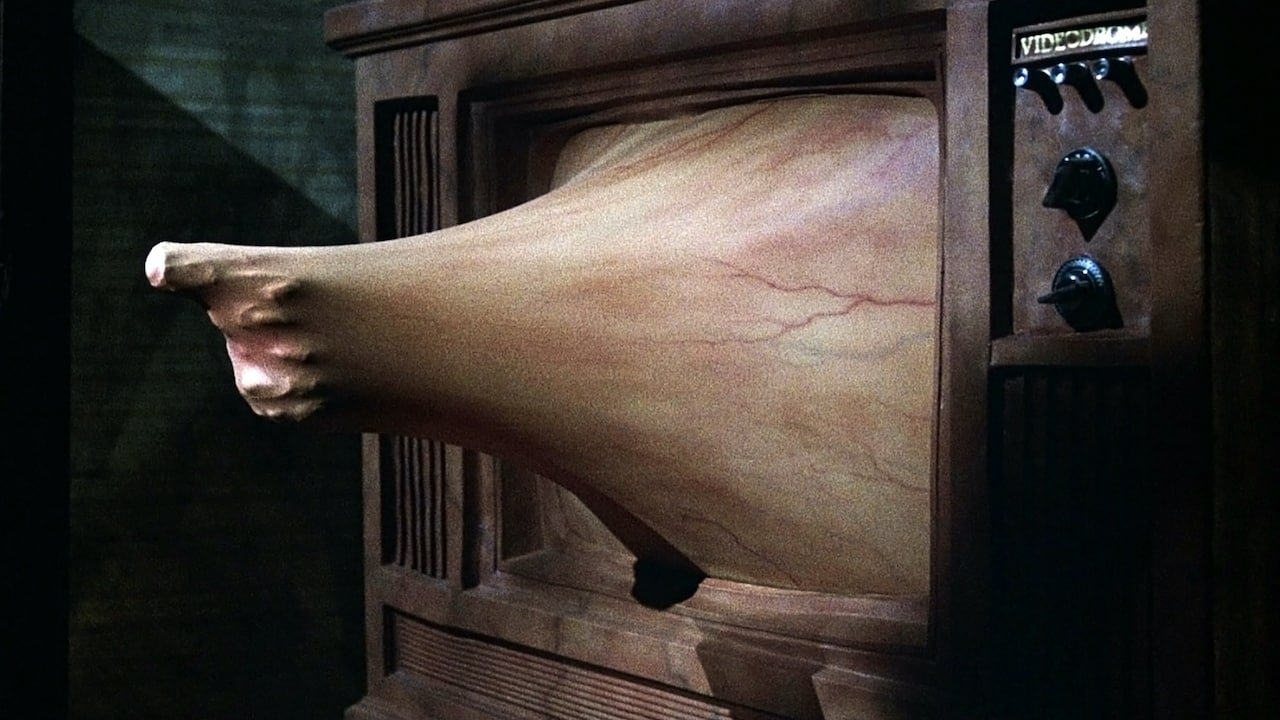
From the very beginning, besides the theme of the mutating body, the theme of science comes into play too, experimenting and generating “monsters.” This is clear in the later films as well, for example in the super cult Scanners and Videodrome (one of my personal favourites among the director's films), through the more mainstream The Fly, to reach the culmination of Dead Ringers, another film I'm fond of, which recounts the not-so-pleasant misadventures of two twin gynaecologists and their experiments, in an epic of surgical instruments and medical deviations.
The body is always at the centre, in an abstract ideal that, in order to be reached, passes through the most concrete thing there is, what you can touch and see, what can disgust or attract you. In this Cronenbergian game I always see a kind of rally between the abstraction of the mind and the concreteness of the body, between the pure concept of beauty and its crash into reality in a true bath of flesh and blood.
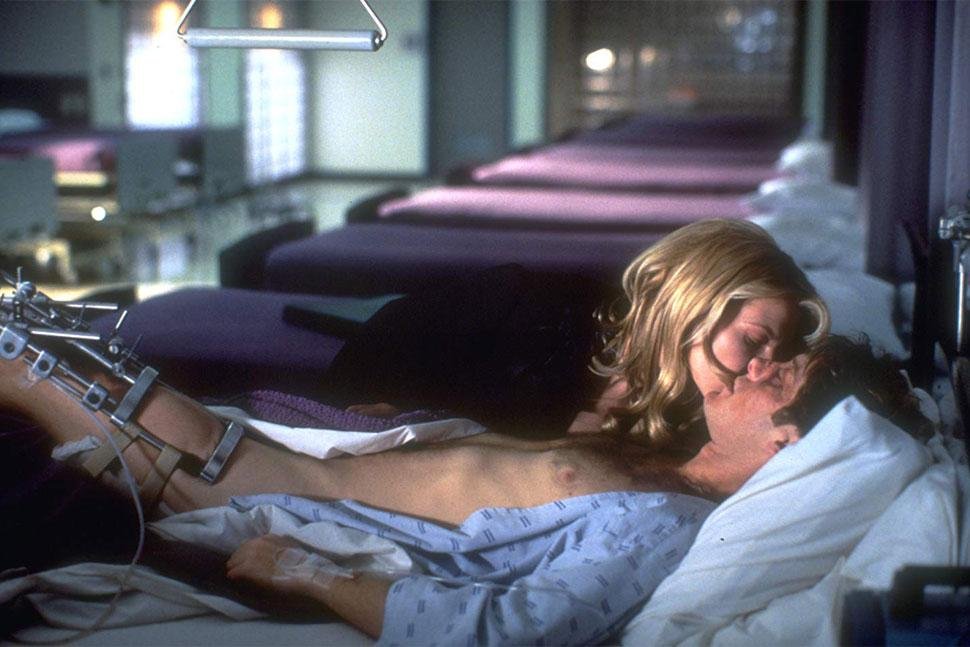
Moving on through the director's filmography, we enter a period in which the theme of the body is joined, quite prominently, by that of the mind and psychology. It plays on levels of reality that pass from the objective to the dreamlike, finally spilling over into the theme of madness. This period includes other masterpieces such as Naked Lunch, inspired by the book by W. Burroughs, and, from 1996, the film in his filmography I am most fond of, Crash, in which we find his aesthetic at its hardest and purest, in a compendium that deals with sexual perversion and, as a consequence, desire, fear and death, the mutilated and transformed body. Flesh, sex, death. And car crashes.
The 2000s mark a shift, a transformation of the director. After Crash came the aforementioned eXistenZ, and in 2002 Spider. If in the former we still find that strong component of material physicality, despite a plot that deals with the “virtual” and with gaming, in Spider the predominant component is definitely the mental one. The theme is mental illness.
In 2005 came A History Of Violence, a true masterpiece with a magnificent Viggo Mortensen, which consecrated him ever more firmly on the Olympus of cinema. Compared with previous decades, budgets and productions change; David is increasingly a “festival” director (in a good way), whose films are awaited with curiosity and high expectations. The director's aesthetic has somehow absorbed the corporeality of the earlier films, giving it back in a different kind of complexity.

The next film, La Promessa Dell’Assassino, again starring Viggo, contains one of the most celebrated, violent, disturbing and visceral scenes in cinema: the fight in the sauna, which the director asked Mortensen to shoot completely naked. Next comes A Dangerous Method, about the turbulent relationship between Jung, Freud, Gross and Spielrein, in a tangle of complex relationships, a film that, purely as a matter of personal taste, I enjoyed less than the others. Then we arrive at Cosmopolis, very strange, with an absolutely perfect Robert Pattison, based on a book by De Lillo. A film that truly amazed me. It takes place entirely in a limousine, and from this microcosm emerge different planes of reality that interweave: the one outside the limousine, a sort of reality "for everyone"; the individual one, closed off in a separate space; the bodily one, made of illnesses, perhaps imaginary, in which the mental one therefore also reigns supreme; and then yet another, the virtual one, which passes through mobile phones, screens and the web, only to become more abstract still and arrive at the financial and the power-driven, ending up crashing into reality through death. Which in the end remains the only real thing.
The latest film so far, and another masterpiece, is Maps to the Stars, which weaves together different stories of characters who mirror our reality, our time, the contradictions of an empty age, made of nothing and founded on "non-value".

In short, you will have gathered that Cronenberg is one of my favourite directors. Maybe it's because it's a love from my youth. Maybe it's because I've never found a single one of his films predictable. Maybe it's because I love those whose language plays along the boundary lines. Maybe it's because he created some of the most immortal images in the history of cinema. Maybe it's because, between body, blood, mutations, transformations, mutilations, illness, medicine, science, virtual realities, psychedelia and so much more, the journey with David can only be thrilling, in a constant play of textures that go beyond the screen to get under your skin.

Black Pills is a column that does not set out to teach anything. There are books, articles and manuals that deal with the biographies of artists, films and works of art in a detailed and exhaustive way. This is not one of those cases. The black pills are small glimpses of cultural and artistic landscapes, at times very broad, which offer the chance to explore themes that do not entirely belong to mass culture, but move along other channels and other circuits. In a world where the choice is often limited to what is defined, in the broadest sense, as pop, I highly recommend taking a few pills of a different colour and perhaps discovering something new, which in some cases, as in mine, can stay with you for the rest of your life.