Chelsea Wolfe: pain and beauty
Marco Mandrino
By Alice Kundalini - She Spread Sorrow
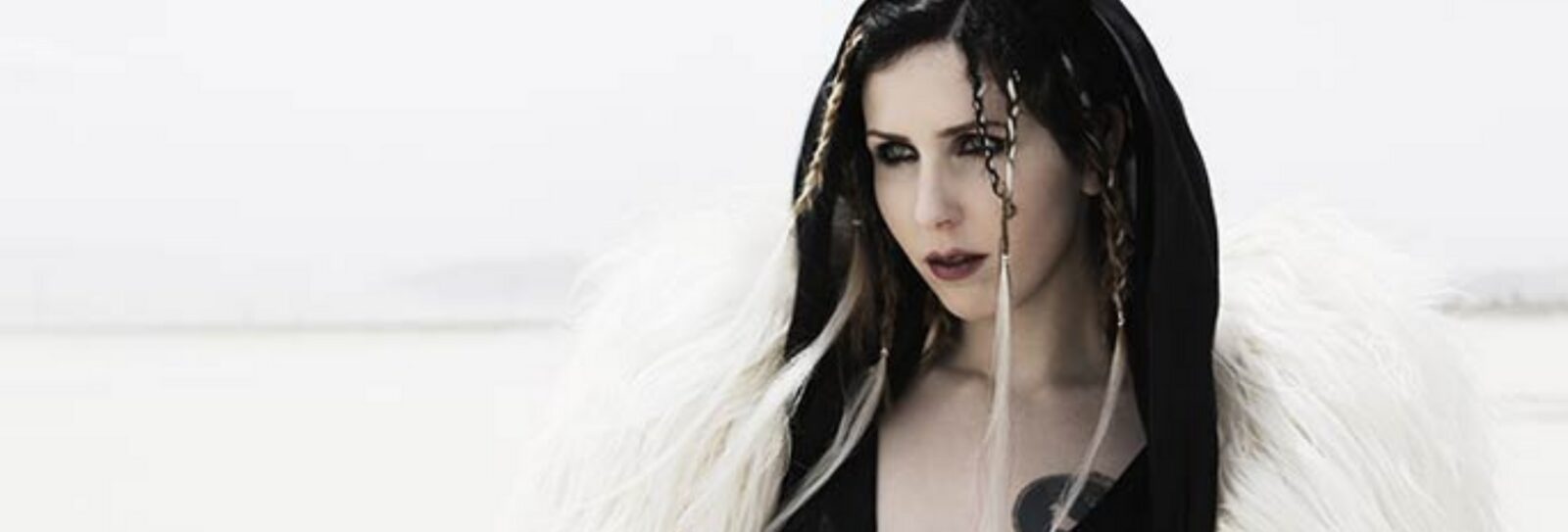
Today's pill is dedicated to a wonderful American musician: Chelsea Wolfe. A brief preface: I was born in '83 (like this artist, as it happens) and I lived the “Girl Power” years to the full, and although at the time I wasn't feeding on the Spice Girls but on Black Metal and Industrial, I have always felt the spirit of female solidarity very strongly. And I admit that, beyond this, I simply like most of the music coming from female projects better, out of personal taste and perhaps because of a sensibility that feels closer to my own. In certain more niche musical genres, women are often rare birds, and that has always saddened me, as well as being something I experienced first-hand, finding myself playing almost always in purely male contexts. But figures like Chelsea Wolfe carry the female banner forward with strength, and thanks to her too it is becoming more and more important and significant, beginning to show a distant light at the end of that tunnel in which certain music is supposedly only for the boys. And for this reason, all the more, when I find badass women who make great music, I can only support them as much as I can, at least as far as I'm able.
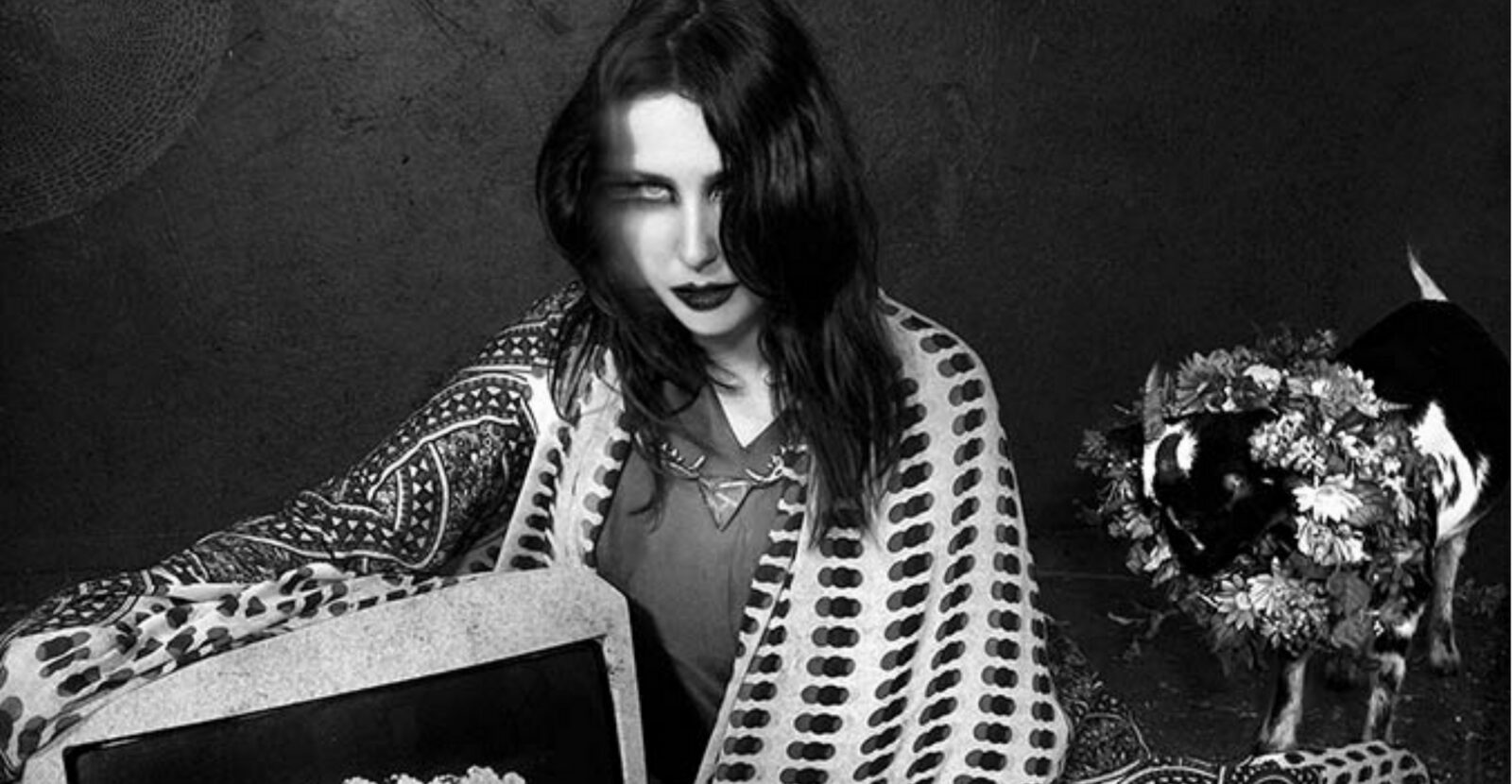
Chelsea Wolfe is a Californian singer-songwriter with a unique sensibility, who makes very dark music, a sort of black folk, rich in influences and shadowy, enriched by her voice, at times unsettling, at times incredibly sweet, which reaches straight to the stomach, always with great grace and power.
She began her career uphill, and perhaps that is why her path is all the more interesting and can be a magnificent source of inspiration. Her first record, from 2006, Mistake in Parting is described by her own self as "shamefully bad." The next two records she produced herself and played alone, with her mother's guitar, which however had a tuning problem and so played in a different, lower key, making this possible hiccup the distinctive trait of both records. She had great difficulty getting on stage, to the point that for her first tour she decided to wear a black veil over her face: to find the strength to perform, she needed not to show herself. This was still 2011/2012, and I find it extremely moving to hear the story of an artist who overcomes her limits out of this absolute need to express herself, to create and to communicate. And to hear the sensitive voice of a great soul who is afraid of showing herself, in an age when we all feel entitled to put ourselves in the shop window, like goods on shelves, and delight in showing everything we do, as if it were interesting to who knows whom. Here, instead, in the face of content, talent and art, we find that sweetness and unique sensitivity of someone who constantly struggles between the desire to sing or cry out pain, emotion, a song, and the desire to bury herself in a room, completely alone. Perhaps because of this contrast, which for many may be just a detail of her career, so rich, I feel Chelsea Wolfe so close, and that is why I love her so deeply.
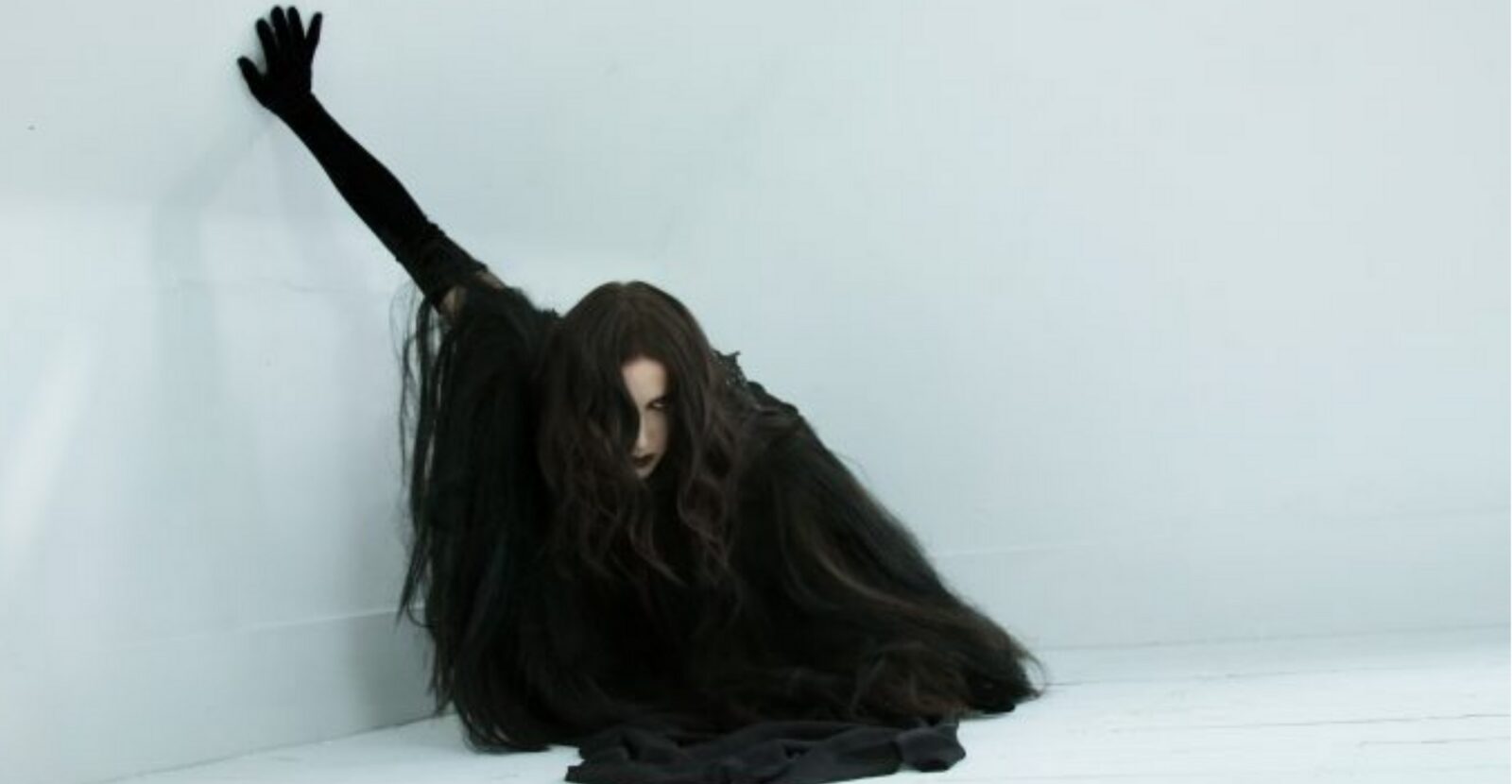
2012 is the year of Pain is Beauty, to this day one of my favourite albums of hers. And it is an album about love. In many different facets: tormented, painful, passionate, always powerful. Musically tormented, painful, passionate, always powerful. Yes, just like the love it speaks of. A record that is more than black, it is red, like the dress she wears on the cover, and not by chance. Alongside the guitar and the instruments most fitting to the folk tradition she comes from, she brings in electronic instruments, synths and rhythms that allow her sound to expand and become more engrossing. And ever darker.
In 2015 this union of genres becomes even more interesting, taking the artist's sound to a different level, more aggressive, even blacker, a folk now in perfect fusion with doom and industrial. The album is Abyss, inspired by reading "Memories, Dreams, Reflections” by Carl Gustav Jung.
Two more albums bring us up to today: HissSpun in 2017 and Birth Of Violence in 2019, both extremely interesting, in which she consolidates this darkened neofolk sound, with sludge, goth and metal moments, always extremely dark.
The singer-songwriter's various collaborations are also interesting, from the one with King Dude in 2013 to the one with another marvellous artist, Myrkur, in 2017. It is also interesting that a track from Pain is Beauty (Feral Love, one of my favourite songs) was included in the soundtrack of Game of Thrones and that she also contributed to that of Fear the Walking Dead with a very powerful industrial track from the album Abyss (CarrionFlowers).
I have only seen her live once, in Milan, and it was a truly intense experience, just like her, her voice, her music, but above all the atmosphere she creates simply with her presence. She is a person who gives off that strange energy, which you feel at once wrapping around you and carrying you away, drawing you into the black of her world, where beauty heals even the deepest wounds.

Black Pills is a column that does not set out to teach anything. There are books, articles and manuals that deal with the biographies of artists, films and works of art in a detailed and exhaustive way. This is not one of those cases. The black pills are small glimpses of cultural and artistic landscapes, at times very broad, which offer the chance to explore themes that do not entirely belong to mass culture, but move along other channels and other circuits. In a world where the choice is often limited to what is defined, in the broadest sense, as pop, I highly recommend taking a few pills of a different colour and perhaps discovering something new, which in some cases, as in mine, can stay with you for the rest of your life.